





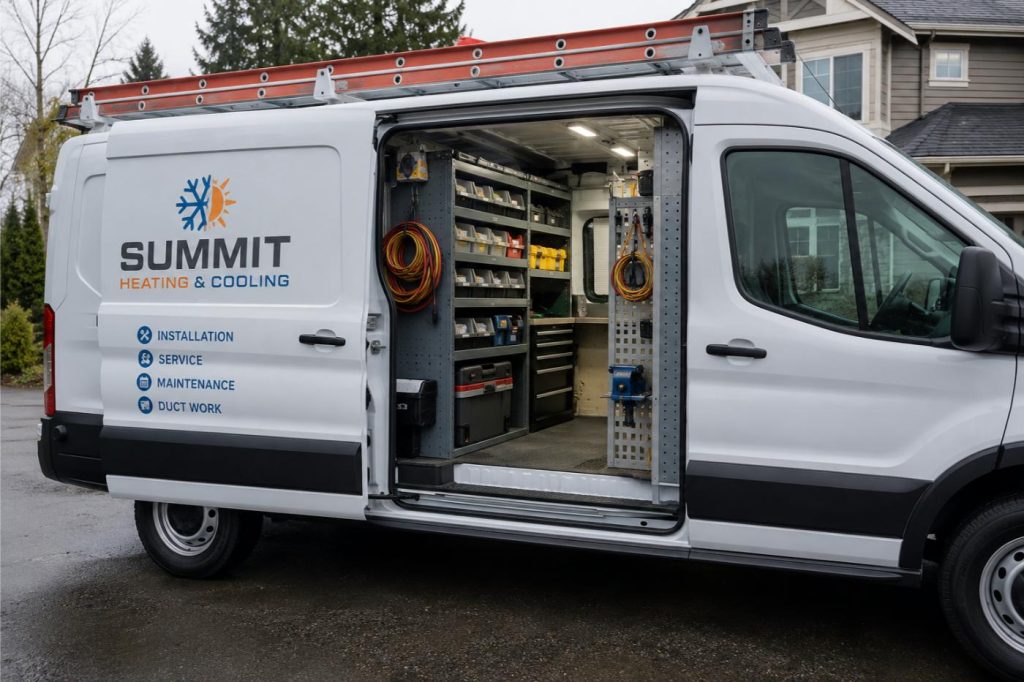
Spec’ing a new commercial vehicle is a balance of physics and finance. For heating, ventilation, and air conditioning contractors, this decision is particularly critical because your service vans serve as heavy-duty mobile parts warehouses and workshops. If you buy a van with insufficient capacity, you risk premature suspension wear and safety violations, but if you buy more vehicle than your daily routes require, you waste capital on fuel and higher upfront costs. Getting the calculation right requires examining three physical metrics before looking at a single options sheet.
Payload Calculations for Heavy HVAC Cargo
Many contractors buy a van based on physical volume only to find the vehicle is overloaded once they load it with parts and equipment. Payload capacity is the maximum weight a vehicle can safely carry, including passengers, fuel, tools, upfitting, and cargo. For HVAC operations, the weight adds up faster than most owners realize.
Consider the average weight of your daily setup:
- Standard steel shelving and partition upfitting: 400 to 600 pounds
- Recovered refrigerant tanks and charging stations: 150 to 200 pounds
- Heavy tools, vacuum pumps, and recovery machines: 200 to 300 pounds
- Copper tubing, fittings, motors, and replacement parts: 400 to 500 pounds
- A two-person crew with personal gear: 400 pounds
When you total these categories, your service van is carrying nearly 2,000 pounds of constant weight before you even load a new furnace, condenser, or commercial rooftop unit for an installation. If you choose a half-ton van with a payload limit of 2,200 pounds, you operate with virtually zero margin, which accelerates tire wear, compromises braking distances, and strains the transmission.
Choosing the Right Roof Height for Daily Efficiency
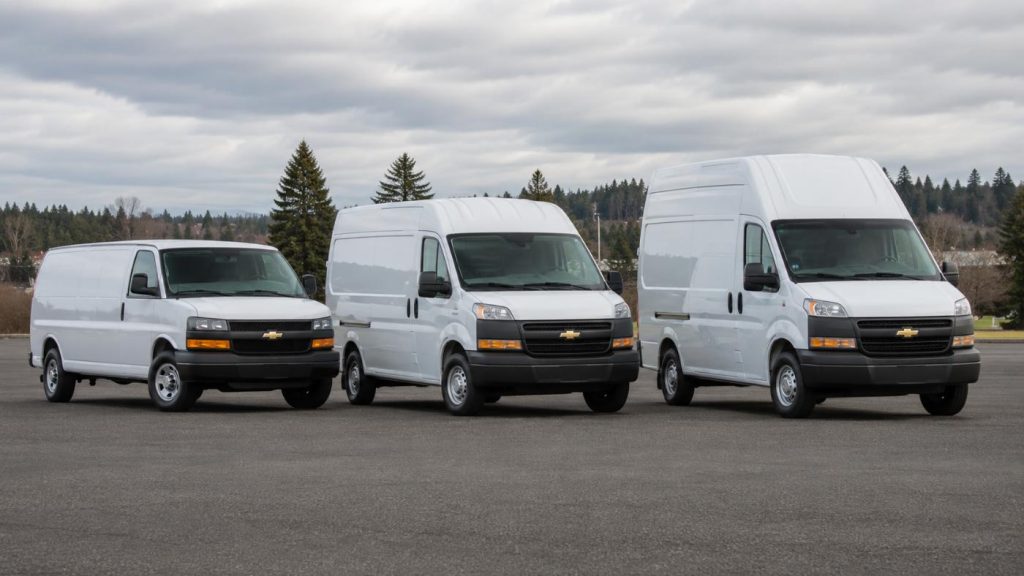
Roof height isn’t just a comfort option; it is a major factor in daily technician productivity. Standard low-roof cargo vans require technicians to bend over constantly while retrieving parts, which causes physical fatigue and increases the risk of back injuries over a long career.
Mid-roof and high-roof configurations allow technicians to stand fully upright inside the cargo area. This simple change speeds up parts retrieval and makes it easier to organize inventory, though it does carry trade-offs. A higher roof limits access to low-clearance parking garages and drive-thrus, and it increases wind resistance on highway routes. If your technicians primarily service residential clients with driveway access, the productivity and ergonomic benefits of a high-roof van almost always outweigh the minor height restrictions.
Power and Torque on Western Washington Hills
Operating a fully loaded cargo van around the Puget Sound means climbing steep grades daily. Whether your crews are navigating the hills of Tacoma or climbing toward Bellevue, engine torque matters more than peak horsepower.
A turbocharged gas engine or a heavy-duty V8 provides the low-end torque required to pull heavy payloads up steep inclines without forcing the transmission to hunt constantly for gears. This power delivery reduces thermal stress on your drivetrain, which directly extends the operating life of your transmission and cooling systems.
Do you want to see how different cargo van configurations fit your current payload requirements? Partner with our commercial vehicle specialists at (253) 336-4216 to compare payload ratings and find the ideal engine option for your routes.
Why Western Washington Trade Businesses Choose Jet Chevrolet
When you are expanding your commercial fleet, you need a partner with the inventory depth to match your timeline. Jet Chevrolet provides extensive regional pool-stock availability, ensuring you can secure the heavy commercial vehicles your business requires.
Located in Federal Way directly along the I-5 corridor, Jet Chevrolet provides efficient solutions to businesses within an hour’s drive of the Seattle-Tacoma metropolitan area. This location serves commercial clients across Western Washington, including:
- South Sound & Local: Federal Way, Tacoma, Kent, Auburn, Puyallup, Olympia
- Greater Seattle & North Sound: Seattle, Bellevue, Renton, Everett, Lynnwood
As part of Dinsmore Auto Group, Jet Chevrolet is locally owned and family operated, and that ownership stays involved in the day-to-day relationship with commercial customers, not just the transaction. Their philosophy remains:
Do More. Save More. Experience MORE.
For HVAC business owners, that means getting real-world spec’ing advice that keeps your service vans running efficiently and safely on every hill.
Talk to a commercial vehicle specialist at (253) 336-4216 to evaluate cargo van specs and secure the right vehicle for your team.
Final Thoughts
Spec’ing an HVAC service van depends on understanding your real-world payload requirements. By calculating the total weight of your tools, inventory, and crew, you can choose a vehicle platform that handles the work without straining.
Investing in the correct roof height and engine power pays dividends in technician productivity and mechanical longevity. Run the numbers first, and your fleet will support your business growth instead of driving up your repair bills.
Connect with us


- August 2026
- July 2026
- June 2026
- May 2026
- April 2026
- March 2026
- February 2026
- January 2026
- December 2025
- November 2025
- October 2025
- September 2025
- August 2025
- July 2025
- June 2025
- May 2025
- April 2025
- March 2025
- February 2025
- January 2025
- November 2024
- October 2024
- September 2024
- August 2024
- July 2024
- June 2024
- May 2024
- April 2024
- March 2024
- February 2024
Archives
- Chevrolet near me
- Chevrolet Safety
- Chevrolet Silverado
- Chevrolet Trailblazer
- Chevrolet Trax
- Chevy Blazer EV
- Chevy Bolt
- Chevy Colorado
- Chevy Equinox EV
- Chevy Finance
- Chevy Silverado EV
- Chevy SUV
- Chevy Tahoe
- Commercial Fleet
- Federal Way Chevrolet Dealer
- Federal Way Chevrolet Service
- Federal Way Used Cars
- Jet Chevrolet
- Jet Chevrolet Service
- Uncategorized