


Blog

All Commercial Fleet Jet Chevrolet Jet Chevrolet Service Federal Way Chevrolet Dealer Chevy Blazer EV Federal Way Chevrolet Service Chevy Equinox EV Chevy Tahoe Chevy Silverado EV Chevy SUV Chevrolet near me Chevrolet Safety Chevrolet Silverado Chevrolet Trailblazer Chevrolet Trax Chevy Bolt Chevy Colorado Chevy Finance Federal Way Used Cars
Giving an employee keys to a company work vehicle
in Commercial Fleet

When Should a Business Move From Employee Vehicles to Company-Owned Work Vehicles?

Many small trade businesses start with employees using their own vehicles for occasional work-related driving. As the company grows, however, there may come a point when dedicated company work vehicles make more sense. There isn't a universal fleet size where that transition should happen. The better question is whether personal vehicles still fit the way the business operates. When Personal Vehicles Can Work For occasional business driving, using employee-owned vehicles can be a practical arrangement. Businesses may reimburse employees for qualifying business mileage or vehicle expenses under an appropriate reimbursement policy. However, occasional trips are different from asking an employee's personal vehicle to function as a work vehicle every day. Look at What Employees Are Actually Doing As field work increases, consider how employees are using their personal vehicles. Are they regularly traveling between job sites? Carrying company tools or materials? Making frequent customer visits? Towing or transporting equipment? Putting substantial business mileage on their own vehicles? If business use has become a major part of the vehicle's daily role, it may be worth evaluating whether a company-owned vehicle is a better fit. Company Vehicles Give the Business More Control With a company-owned work vehicle, the business chooses the vehicle based on the work it needs to perform. The company can also establish consistent policies for authorized drivers, maintenance, fuel, vehicle use, and equipment. That's different from relying on employees' personal vehicles, which may vary considerably in age, condition, capability, and suitability for the work. Insurance should also be reviewed carefully whenever employees drive for business, whether they use personal or company vehicles. The appropriate coverage depends on the business and how the vehicles are used. Consider the Employee Side Too Regularly using a personal vehicle for work can mean additional mileage and wear for the employee. A reimbursement program can address qualifying business vehicle expenses, but it doesn't necessarily answer the broader operational question of whether an employee's personal car or truck is the right vehicle for the job. As a company adds crews or expands its service territory, providing work vehicles may become part of building the infrastructure needed to support field operations. Plan for the Transition to Company Vehicles Moving to company-owned vehicles gives a business greater control over how its work vehicles are selected, maintained, and used. It also means bringing expenses such as insurance, maintenance, registration, fuel or charging, and fleet administration into the company's operating plan. Clear vehicle-use policies are important as well. If employees are allowed to commute or use company vehicles personally, there may be tax and recordkeeping considerations depending on the circumstances, so businesses should work with their tax and insurance professionals when establishing those policies. Planning for these responsibilities from the beginning can help a business build a fleet that supports its crews and continues to work as the company grows. Is your business reaching the point where dedicated work vehicles make sense? Connect with the Jet Chevrolet team at (253) 336-4216 to discuss your commercial vehicle needs. Do More. Save More. Experience MORE. Final Thoughts Employee-owned vehicles can work well when business driving is limited. But, as crews spend more time on the road and vehicles become more important to daily operations, dedicated company work trucks may deserve a closer look. Consider how often employees drive for work, what they're carrying, what the job requires, and how much control the business needs over its vehicles. The right time to build a company fleet is different for every business, but the decision should follow how the company actually operates.

Read More
Tracking statistics about a commercial fleet vehicle

The First 90 Days With a New Fleet Vehicle: What Businesses Should Track

Adding a new work truck or commercial vehicle to your fleet is only the beginning. The first few months of actual use can tell you whether the vehicle is performing the job you purchased it to do. Instead of waiting until the end of the year to evaluate a new vehicle, use its first 90 days to establish a baseline. Mileage, fuel use, maintenance needs, utilization, and feedback from the employees using the vehicle can all provide useful information for future fleet decisions. Start With a Clear Vehicle Record Before the vehicle enters regular service, document the basics. Record the VIN, vehicle configuration, assigned driver or crew if applicable, in-service date, initial mileage, and any accessories or upfits installed on the vehicle. Keep relevant warranty, maintenance, and vehicle documentation accessible as well. Starting with accurate records gives you something to reference later when reviewing operating history or comparing vehicles within the fleet. Track How Much the Vehicle Is Actually Used One of the simplest things to measure is utilization. Depending on the type of work vehicle, useful measurements can include: Miles driven Days in use Number of trips Engine hours, when relevant Type of work or routes the vehicle regularly handles After 90 days, compare actual use with what you expected when the vehicle was purchased. A truck intended for daily field work may be operating differently than anticipated, and that information can be useful when deciding what the next vehicle should look like. Establish a Fuel-Use Baseline Record fuel purchases and mileage consistently from the beginning. The goal isn't necessarily to decide whether a vehicle is “good” or “bad” based on its first few tanks. Fuel consumption can be affected by driving conditions, load, routes, idling, weather, and how the vehicle is used. Instead, the first 90 days can provide an initial operating baseline that can be compared with the vehicle's performance over time or with similar vehicles performing similar work. Fuel consumption and mileage are commonly tracked together as part of fleet performance monitoring. Get Feedback From the People Using It Numbers don't tell you everything. Ask the employees who regularly use the vehicle whether it fits the work. Are they frequently carrying passengers? Is the vehicle being used for the jobs you expected? Are there features or equipment they use constantly? Is something about the configuration making routine work unnecessarily difficult? This doesn't mean every preference requires a change. The goal is to identify patterns that could inform the next vehicle purchase or upfit. Review the Vehicle at 30, 60, and 90 Days You don't need a complicated reporting system to learn from a new fleet vehicle. A simple review at roughly 30, 60, and 90 days can help answer: Is the vehicle being used as expected? Look at mileage, trips, routes, assignments, and the work it's performing. Is the configuration working? Talk with the employees using it and note recurring issues or needs. What is it costing to operate so far? Review fuel and any maintenance or other vehicle-specific operating expenses you've chosen to track. At 90 days, you should have a clearer picture of how the vehicle fits into the business than you had on the day you bought it. Use What You Learn on the Next Purchase The greatest value of tracking a new vehicle may come when it's time to buy another one. If a particular configuration works well, you have real-world experience supporting that decision. If the vehicle is consistently being used differently than expected, that information can help you reconsider the next purchase. Over time, keeping consistent records across multiple vehicles can give a business its own operating history rather than relying entirely on assumptions when making fleet decisions. Fleet utilization data is commonly used to inform acquisition, allocation, and replacement planning. Adding or replacing a commercial vehicle? Connect with the Jet Chevrolet team at (253) 336-4216 to discuss your business and fleet needs. Do More. Save More. Experience MORE. Final Thoughts The first 90 days with a new fleet vehicle are an opportunity to learn whether the vehicle fits the job it was purchased to perform. Track how it's used, what it costs to operate, how employees work with it, and whether the original configuration still makes sense after real-world use. Those early observations can help turn one vehicle purchase into better information for the next fleet decision.

Commercial Fleet Vehicles

How Many Work Vehicles Does Your Business Actually Need?

As a business grows, knowing when to add another work vehicle isn’t always obvious. A contractor may have enough trucks most days but run short when multiple crews need to be in different places. Another business may have vehicles sitting often enough that adding another one doesn’t make sense yet. That’s where fleet sizing comes in. Fleet sizing is about matching the number and types of commercial vehicles you operate to the work your business actually performs. Start With How Your Vehicles Are Actually Used Mileage alone doesn’t tell you whether your fleet is the right size. A local service van may accumulate relatively few miles while still being needed every day. Instead, look at how frequently each vehicle is needed. Are most working every day? Are certain trucks constantly requested by multiple employees? Are others regularly sitting unused? The goal is to understand whether your current fleet has enough capacity to support the work your crews are ready to perform. Watch for Vehicle Scheduling Conflicts One of the clearest signs that a business may be outgrowing its fleet is when vehicle availability starts affecting scheduling. Watch for situations like: Two crews regularly needing the same vehicle Employees waiting for a vehicle before leaving for a job Jobs being scheduled around vehicle availability Frequent vehicle reassignment between crews A specialized truck being unavailable when needed An occasional conflict is normal. When it becomes routine, vehicle availability may be creating a bottleneck. Think in Crews, Not Just Employees Ten employees don’t necessarily require ten vehicles. A service business with technicians traveling independently may need more vehicles than a contractor whose employees travel together in crews. A better question is: How many crews need to operate independently at the same time? Then consider what each crew needs to carry, tow or access throughout the day. Plan for Growth Your current workload isn't the only factor. If you're hiring technicians, adding another crew, expanding your service territory or taking on more work, your vehicle needs may grow along with the business. Ideally, vehicle planning happens alongside hiring and expansion, not after a new employee is ready to work and there isn't an appropriate vehicle available. Make Sure You Have the Right Mix of Vehicles Fleet sizing isn't only about how many vehicles you have. It's also about what those vehicles can do. Service vans, pickups, towing vehicles and specialized work trucks may serve completely different roles. A business can have enough vehicles overall and still experience shortages if too few are equipped for a particular job. Also consider what happens when a key vehicle is unavailable for maintenance or repairs. If losing one truck immediately disrupts the schedule, that may be worth factoring into future fleet planning. When Does Adding Another Vehicle Make Sense? Before expanding your fleet, consider: Are vehicle conflicts happening regularly? Are you adding another independently operating crew? Is the business expanding into a larger service area? Do you need capabilities your existing vehicles don't provide? Would another vehicle allow your team to complete additional work? Is the need consistent rather than just seasonal? If there’s a clear answer, it may be time to evaluate additional fleet capacity. Why Western Washington Businesses Work With Jet Chevrolet Located in Federal Way along the I-5 corridor, Jet Chevrolet works with commercial customers throughout Western Washington, including Federal Way, Tacoma, Kent, Auburn, Puyallup, Olympia, Seattle, Bellevue, Renton, Everett and Lynnwood. As part of Dinsmore Auto Group, Jet Chevrolet is locally owned and family operated. Our commercial team works with businesses to evaluate vehicle options based on their work and fleet requirements. Do More. Save More. Experience MORE. As your business adds employees, crews, customers or service areas, your commercial vehicle needs may change with it. Planning to add another work truck or commercial vehicle? Connect with the Jet Chevrolet team at (253) 336-4216 to discuss your fleet needs. Final Thoughts There isn't one vehicle-to-employee ratio that works for every business. The right fleet size depends on how your crews operate, what your vehicles need to accomplish and where your business is headed. When vehicle availability starts limiting the work your team is ready to perform, it may be time to consider adding capacity.

Gas vehicle towing a payload

Gas vs. Diesel Work Trucks: Which Engine Makes Sense for Your Business?

When choosing a heavy-duty work truck, one of the biggest decisions is whether to go with a gasoline or diesel engine. Neither is automatically better. The right choice depends on what the truck will actually be asked to do. For fleet buyers, the best place to start is with the job rather than the engine. Start With How the Truck Will Be Used Before choosing gas or diesel, consider: How frequently the truck will tow The trailers it needs to handle Typical cargo and passenger loads Daily driving conditions How the vehicle will be used throughout the workweek A truck primarily carrying crews and equipment between job sites may have different requirements than one regularly towing substantial trailers. When a Gas Work Truck May Make Sense A gas-powered truck can be a practical choice when its capabilities match the work the business needs to perform. Businesses using trucks for job-site travel, carrying crews and equipment, or towing within the vehicle's rated capabilities shouldn't assume diesel is necessary simply because the vehicle is used commercially. The important question is whether the specific truck and configuration can safely handle the work required of it. When Diesel May Make Sense Diesel deserves consideration when a business has more demanding towing requirements. Diesel engines offered in many heavy-duty pickups can provide greater torque than comparable gasoline engine options, which can make them worth considering for more demanding towing applications. That doesn't mean every business that tows needs diesel. The actual trailer, frequency of towing, vehicle configuration, and operating requirements should guide the decision. Look Beyond the Engine The engine isn't the only factor that determines what truck fits a certain job. Cab and bed configuration, drivetrain, equipment, passengers, cargo, trailer type, and installed accessories can all affect a vehicle's capabilities. Fuel costs, purchase price, maintenance requirements, expected ownership period, and utilization can also affect the financial side of the decision. Rather than assuming gas or diesel will always cost less, businesses should evaluate those factors based on their own expected use. Check the Specific Vehicle Published maximum towing figures shouldn't automatically be treated as the capability of every truck in a model line. Before purchasing a work truck for towing or hauling, review the ratings and documentation for the specific vehicle and configuration being considered. Comparing gas and diesel work trucks for your business? Connect with the Jet Chevrolet team at (253) 336-4216 to discuss your commercial vehicle needs. Do More. Save More. Experience MORE. Final Thoughts Gas versus diesel isn't about which engine is universally better. A gas work truck may provide everything one business needs, while a diesel may be better suited to another operation with more demanding towing requirements. Start with the work the truck needs to perform, then compare the specifications and ratings of the specific vehicles you're considering.

Title and Registration for a Fleet Vehicle

Fleet Vehicle Titles, Registration, and Records: What Businesses Should Keep Organized

As a business adds commercial vehicles and work trucks, keeping accurate records helps make the fleet easier to manage. Important vehicle information may be needed for registration, insurance, maintenance, warranty work, upfits, and eventually a sale or trade-in. Creating a consistent record for each vehicle gives the business one place to find that information throughout the vehicle’s time in the fleet. Create a Record for Every Vehicle Each company vehicle should have its own record rather than relying on information scattered across different locations. Useful information to maintain can include: VIN and license plate number Title and registration information Purchase or lease documents Insurance information Maintenance and repair history Warranty information Upfit and accessory documentation Mileage or utilization records Exactly what a business needs to retain can vary, but keeping vehicle-specific information together makes it easier to find when needed. Keep Important Information Accessible Some vehicle information may need to be readily available when a work truck is on the road, while other records are better kept securely with the business. Establishing a consistent process for where documents are stored can help employees and managers know where to find the information they need without relying on paperwork being passed between drivers. Businesses should also make sure they follow applicable state requirements for documents that must be carried or available in a vehicle. Don't Forget Upfit Documentation Commercial vehicles often receive equipment or modifications to prepare them for a specific job. Service bodies, racks, storage systems, towing equipment, electrical equipment, and other additions may come with invoices, warranties, instructions, or specifications. Keeping those records associated with the correct vehicle can be useful for future service, warranty questions, replacement parts, or when the vehicle is eventually sold or traded. Maintain a Service History Maintenance records provide a history of what has been done to each vehicle and when. Recording scheduled maintenance, repairs, tire service, and other significant work gives the business a clearer picture of each vehicle's history. For a growing fleet, consistent records also make it easier to review an individual truck without relying on employee memory. Keep Records Through the Vehicle's Time in the Fleet Vehicle records can remain useful from the day a work truck enters service until the day it leaves the fleet. When it's eventually time to sell or trade a vehicle, having purchase information, equipment documentation, and service records readily available can make it easier to review the vehicle's history and prepare for its next step. The system doesn't have to be complicated. The goal is simply to create a consistent process that follows each vehicle throughout its time with the business. Adding work trucks or commercial vehicles to your business? Connect with the Jet Chevrolet team at (253) 336-4216 to discuss your fleet needs. Do More. Save More. Experience MORE. Final Thoughts A work truck is an important business asset, and keeping its records organized helps the business manage that asset throughout its time in the fleet. A consistent system for registration information, insurance documents, service history, warranties, and upfit records can become even more useful as a business adds vehicles and grows its fleet.

Filling up gas with a Fuel Card

Fleet Fuel Cards: When Do They Make Sense for a Small Business?

As a business adds work trucks and drivers, keeping track of fuel purchases can become more complicated. A fleet fuel card can provide a more centralized way to manage and review those transactions. For small businesses, the question is whether the additional controls and reporting are useful for the way your vehicles operate. What Is a Fleet Fuel Card? A fleet fuel card is a payment card designed specifically for business vehicle expenses. Depending on the provider and program, businesses may be able to assign cards to specific vehicles or drivers, set purchasing controls, and collect transaction information in one place. Features and fees vary, so businesses should compare individual programs before choosing one. When Fuel Cards Can Be Useful A dedicated fuel-card program may become more useful as the number of vehicles and drivers grows. Potential benefits can include: Keeping business fuel purchases separate from personal expenses Consolidating fuel transactions Setting purchasing limits or restrictions, when offered Tracking purchases by vehicle or driver Simplifying recordkeeping This can give owners and fleet managers a clearer view of how fuel is being purchased across company vehicles. Fuel Cards Aren't the Only Option A small business with only a few vehicles may already have a system that works well, such as a business credit card and consistent expense reporting. Fuel cards can also differ in where they're accepted, what controls they offer, and what fees or discounts may apply. A program should be evaluated based on the business's routes, drivers, and purchasing needs rather than assuming a fleet-specific card will automatically save money. Use the Data The value of a fuel card isn't limited to paying at the pump. Transaction records can help businesses review fuel spending and identify unusual purchasing patterns or differences between vehicles or employees. That information becomes more useful when it's reviewed consistently rather than simply collected. Looking for work trucks or commercial vehicles for your growing fleet? Connect with the Jet Chevrolet team at (253) 336-4216 to discuss your commercial vehicle needs. Do More. Save More. Experience MORE. Final Thoughts Fleet fuel cards can provide useful controls and recordkeeping as a business adds vehicles and drivers, but they aren't necessary for every operation. The right system is the one that gives your business an efficient, manageable way to pay for fuel and understand where those expenses are going.

Employer giving their keys to employee

Adding Your First Employee-Driven Work Vehicle: What Should You Plan For?

For many small businesses, the first work vehicle is often driven by the owner. As the company grows and adds technicians or crews, that can change. Adding your first employee-driven company vehicle can give another employee or crew the ability to operate independently and help the business handle more work. Before choosing the vehicle, consider how it will actually be used. Start With the Employee's Role It is important to consider: How many people will normally ride in it? What tools, parts, or materials will they carry? Will they tow equipment? Will they make service calls or travel to jobsites? Does the vehicle need racks, shelving, toolboxes, or another upfit? Starting with the job can help narrow down the appropriate truck, van, or commercial configuration. Decide How the Vehicle Will Be Used Determine whether the vehicle will be assigned to one employee, shared among employees, or assigned to a particular crew. The business should also establish expectations for where the vehicle is kept and when it can be used. If employees can take company vehicles home or use them personally, businesses should review any applicable insurance, tax, and recordkeeping considerations with the appropriate professionals. Establish Clear Driver Expectations Once employees begin operating company vehicles, a basic vehicle policy can help establish expectations for: Authorized drivers Vehicle use Accident or damage reporting Fuel or charging Maintenance notifications Traffic and parking violations The exact policy will vary by business, but establishing one early creates a foundation as the fleet grows. Make Vehicle Reporting Simple The employee driving the vehicle every day may be the first to notice when something needs attention. Create a simple way to report warning lights, damage, unusual vehicle behavior, or upcoming maintenance. This helps make vehicle communication part of the normal workflow. Think Beyond the First Vehicle Your first employee-driven vehicle may eventually become one of several. Pay attention to what works. Is the cargo space appropriate? Does the upfit fit the job? Which features are useful? What would you change next time? Those lessons can help guide future commercial vehicle purchases as the company adds employees and crews. Why Western Washington Businesses Work With Jet Chevrolet Located in Federal Way along the I-5 corridor, Jet Chevrolet works with commercial customers throughout Western Washington, including Federal Way, Tacoma, Kent, Auburn, Puyallup, Olympia, Seattle, Bellevue, Renton, Everett, and Lynnwood. As part of Dinsmore Auto Group, Jet Chevrolet is locally owned and family operated. Our commercial team works with businesses evaluating work trucks and commercial vehicles based on their operational needs. Do More. Save More. Experience MORE. Adding an employee-driven work vehicle can be an exciting stage of business growth, giving employees or crews the ability to operate independently. Ready to add a work truck, service van, or commercial vehicle to your business? Connect with the Jet Chevrolet team at (253) 336-4216 to discuss your commercial vehicle needs. Final Thoughts Your first employee-driven work vehicle is about more than handing someone the keys. Consider the work they'll perform, establish clear expectations for its use, and use what you learn to help plan your fleet as the business continues to grow.

When Your Business Outgrows a One-Size-Fits-All Commercial Fleet

When a business is small, having work trucks that can handle a little bit of everything can make sense. The same pickup might haul materials one day, tow equipment the next, and carry a supervisor between job sites later in the week. As the business grows, those roles can become more distinct. Crews may take on different types of work, service areas may expand, and certain vehicles may spend most of their time performing one specific job. At that point, it may be worth asking whether every vehicle in the fleet still needs to do everything. Why Versatility Works for Smaller Fleets Versatile vehicles give a small business flexibility. When there are only a few trucks available, being able to move them between employees and jobs can be useful. It can also simplify fleet decisions. Instead of maintaining several highly specialized vehicle types, a business can use similar trucks across different assignments. But growth can change that equation. A vehicle that's capable of several tasks isn't necessarily the vehicle every role requires. Look at the Roles Within Your Fleet Rather than looking at the fleet as one group of vehicles, consider what each truck actually does during a typical week. A growing contractor might have vehicles serving very different purposes: Crew vehicles traveling between active job sites Supervisor trucks used primarily for site visits and meetings Trucks regularly towing equipment or trailers Service vehicles handling smaller calls throughout the day Vehicles transporting materials or supplies These roles don't automatically require different vehicles. But identifying them can reveal where the fleet has become more specialized even if the vehicles haven't. When Dedicated Vehicles May Make Sense Specialization becomes worth considering when a vehicle repeatedly performs the same type of work. For example, if one truck regularly pulls an equipment trailer, the requirements for that vehicle may differ from a supervisor's truck that spends most of its time traveling between sites. Likewise, a service technician making multiple stops each day may have different vehicle needs than a crew transporting equipment to a long-term project. The goal isn't to create a different vehicle for every employee. It's to recognize when a particular role has become consistent enough that choosing a vehicle around that role may be practical. There Are Advantages to Keeping Vehicles Similar A more specialized fleet isn't always the answer. Using similar vehicles can make it easier to move drivers between trucks when schedules change or a vehicle is unavailable. Drivers may also be more familiar with controls and operating characteristics when vehicles are similarly equipped. For some businesses, that flexibility is more valuable than having vehicles tailored to individual roles. That's why fleet specialization should follow the needs of the business rather than growth alone. Watch for Changes in the Business The vehicles that worked when a company had five employees may not reflect what it needs with 20. New services, larger projects, additional crews, wider service territories, and different equipment can all change how company vehicles are used. Instead of automatically replacing an existing truck with a similar one, use the purchase as an opportunity to look at the role that vehicle will fill now. Ask what it will do most often, who will use it, where it will operate, and whether its responsibilities are different from the rest of the fleet. Build the Fleet Around the Work There is no ideal mix of commercial vehicles that applies to every growing business. Some companies benefit from keeping most of their vehicles interchangeable. Others reach a point where different crews and responsibilities call for different types or configurations of work vehicles. Many fleets will use a combination of both approaches. The important part is making those decisions based on how the business actually operates rather than assuming every new vehicle should match the last one. Is your growing business adding or replacing work vehicles? Connect with the Jet Chevrolet team at (253) 336-4216 to discuss your commercial vehicle needs. Do More. Save More. Experience MORE. Final Thoughts Growth doesn't necessarily mean a business needs more types of vehicles. But it can change the jobs those vehicles are expected to perform. Taking a closer look at the roles within your fleet can help determine where versatility still makes sense and where a more dedicated vehicle may better match the work. As your business changes, your fleet should continue to reflect the work your crews actually do.

A mechanic running diagnostics on an idling commercial fleet vehicles

The Cost of Idling: What Fleet Owners Should Know About Fuel, Engine Hours and Work Vehicles

A work truck doesn't have to be moving to consume fuel. Service vehicles can spend time idling between appointments, at job sites, while crews complete paperwork, or while drivers wait for their next assignment. Some of that idle time may be necessary. Some may not be. For businesses operating multiple vehicles every day, understanding fleet idling is one more way to understand where fuel is being used. Why Work Vehicles Idle Not all idling is avoidable. Depending on the business and vehicle, an engine may remain running while: Waiting at a job site Completing paperwork Loading or unloading Waiting for another crew member Taking a break Staging between appointments Idle-reduction efforts should focus on parked or stationary idling that can reasonably be avoided, not time spent stopped in traffic or situations where stationary engine power is needed to perform the vehicle’s primary work functions. The useful distinction for a fleet manager is between operationally necessary idling and unnecessary parked idling. Idling Uses Fuel An internal-combustion engine continues consuming fuel while it runs, even when the vehicle isn't moving. The exact amount depends on the vehicle, engine, operating conditions, accessory use, and other factors. That's why a universal “idling costs your business $X per year” claim isn't particularly useful. What is universally true is simpler: reducing unnecessary idling reduces fuel consumed during that unnecessary idle time. Measure Before Setting a Fleet Policy Before creating an anti-idling policy, determine whether unnecessary idling is actually a meaningful issue in your fleet. Depending on the vehicles and technology available, businesses may be able to review idle-time data through a telematics platform. If you don't have telematics, driver discussions and operational observations can still help identify why vehicles are sitting with their engines running. Then ask a more useful question: Why is this vehicle idling? If the answer is “because equipment requires it,” the solution may be different from a vehicle idling while someone completes paperwork. Understanding the reason matters more than setting an arbitrary target. Look at the Entire Workday Reducing unnecessary idling shouldn't make the job harder or interfere with safe vehicle operation. Instead, look for practical opportunities. Could paperwork be completed inside the customer's building rather than in a running vehicle? Is a vehicle being left running during loading/unloading when it doesn't need to be? Are crews waiting for long periods because of inefficient scheduling? Does a particular job require vehicle-powered equipment? These questions can reveal whether the issue is driver behavior, vehicle configuration, dispatching, equipment needs, or simply an unavoidable part of the work. Vehicle Selection Can Be Part of the Conversation Different businesses use their vehicles differently. An HVAC technician covering residential service calls has different operating requirements than a construction crew towing equipment or a delivery business making frequent stops. When replacing a commercial vehicle, fuel economy is one factor to consider alongside: Payload requirements Towing needs Cargo space Upfit weight Route type Annual mileage Engine and drivetrain options Job-site requirements No single specification determines the best fleet vehicle. The right choice depends on how the vehicle will actually be used. Planning your next commercial vehicle purchase? Connect with the Jet Chevrolet team at (253) 336-4216 to discuss the requirements of your business. Final Thoughts Not every minute of fleet idling is waste. Some jobs require vehicles to remain running. The better goal is to understand why your vehicles idle and identify unnecessary engine-on time where practical. For businesses with several vehicles, even a basic review of idle patterns can provide useful information about how the fleet operates.

A Shared Commercial Fleet Vehicle

Take-Home Work Vehicles vs. Shared Fleet Vehicles: Which Approach Fits Your Business?

As a trade business grows, an important fleet decision isn't just which vehicles to buy. It's also who uses them and where they go at the end of the day. Some businesses assign vehicles to employees who take them home, while others keep company vehicles at the shop for crews to use as needed. Neither approach is automatically better. The right setup depends on how your crews work, where jobs are located, and how the business manages its fleet. When Take-Home Work Vehicles Make Sense Take-home vehicles can make sense for plumbers, HVAC technicians, electricians, and other field-service employees who regularly travel directly to their first appointment instead of reporting to a central location. An assigned vehicle also gives an employee consistent access to the same truck or van each day. However, businesses should establish clear policies around personal use, authorized drivers, fuel, parking, maintenance reporting, and after-hours use. Insurance and tax considerations may also apply, so businesses should consult the appropriate professionals about their specific situation. When Keeping Vehicles at the Business Makes Sense Keeping vehicles at a central location may work better when crews start and end their day at the shop, load materials each morning, or use different vehicles depending on the day's work. It can also give managers regular access to the vehicles for inspections and help keep vehicle use centered around business operations. The tradeoff is that employees generally need to report to the business before heading to their first job, which may not fit every service model. Assigned vs. Shared Vehicles Even when vehicles stay at the business, companies need to decide whether each employee or crew has an assigned vehicle or whether vehicles are shared. Assigned vehicles provide consistency and can make responsibility for reporting issues easier to define. Shared vehicles provide flexibility when schedules, crews, or job requirements change. For shared vehicles, clear procedures for reporting damage, fuel levels, maintenance concerns, and other issues between drivers become especially important. Consider Your Service Area Geography can also influence the decision. A Western Washington business may have technicians living and working throughout Federal Way, Tacoma, Kent, Auburn, Seattle, Bellevue, and surrounding communities. Requiring every employee to report to one location creates a different operating pattern than allowing certain technicians to travel directly to their first job. Which approach works better depends on employee locations, service territories, dispatching, and the type of work being performed. Establish Clear Vehicle-Use Policies Regardless of where company vehicles spend the night, employees should understand expectations around: Authorized drivers and personal use Fuel purchasing Accident and damage reporting Maintenance concerns After-hours use Parking and vehicle security Policies will vary by business, but having clear expectations becomes increasingly important as more vehicles and drivers are added. Reevaluate as Your Fleet Grows A system that works with three work trucks may not make sense with fifteen. As a business grows, periodically reconsider which employees need dedicated vehicles, whether some vehicles can be shared, and whether the current approach still fits how crews operate. Planning your next commercial vehicle purchase? Connect with the Jet Chevrolet team at (253) 336-4216 to discuss your business and fleet needs. Why Western Washington Businesses Work With Jet Chevrolet Located in Federal Way along the I-5 corridor, Jet Chevrolet works with commercial customers throughout Western Washington, from the South Sound to the greater Seattle area. As part of Dinsmore Auto Group, Jet Chevrolet is locally owned and family operated. Our commercial team works with businesses evaluating work trucks and commercial vehicle options for their operations. Do More. Save More. Experience MORE. Connect with the Jet Chevrolet team at (253) 336-4216 to discuss your next commercial vehicle. Final Thoughts There isn't one correct way to assign company vehicles. Take-home, assigned, and shared vehicles can each make sense depending on how a business operates. The right approach comes down to where crews start their day, how vehicles are used, and how much flexibility the business needs as its fleet grows.

A guy configuring his commercial fleet vehicle

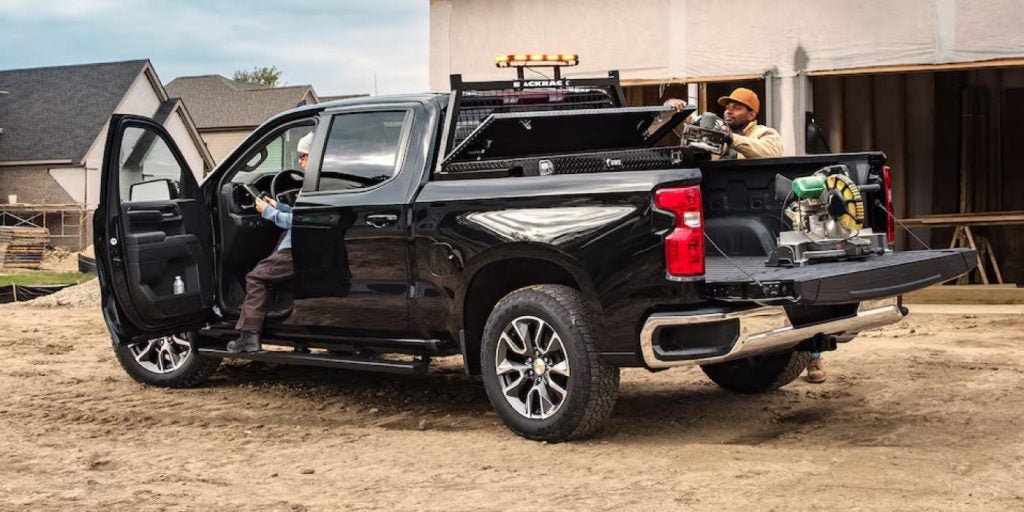
How to Configure a Work Truck for Your Trade: Bed Length, Storage, Racks, and Payload

For contractors, a pickup bed has to do more than hold tools. It needs to carry the equipment and materials a crew uses while keeping frequently needed items accessible. That makes bed length, storage, racks, payload, and weather protection important considerations when choosing a commercial work truck. Before selecting a truck or upfit, start with the job itself. Start With What the Truck Actually Carries There is no single ideal work truck setup for every contractor. A general contractor, electrician, landscaper, and construction crew may all use pickups differently. Consider what the truck carries during a normal workweek, including: Power and hand tools Toolboxes and storage systems Ladders and building materials Generators or compressors Job-site equipment Towing equipment Also consider how often each item is used. Equipment needed at every stop should generally be easier to reach than something used occasionally. This can also help determine whether a pickup is the right vehicle at all. Some operations may be better served by an enclosed cargo van, service body, flatbed, or another commercial configuration. Choosing the Right Bed Length A longer bed provides additional room for tools and materials, while a shorter bed may work for businesses that don't regularly carry long or bulky cargo and prefer a more compact overall vehicle. For fleet buyers, the key question is simple: What needs to fit in the bed on a normal day? Bed and cab combinations vary by model, so compare the specifications of the actual truck configurations you're considering rather than simply choosing the largest available option. Open Bed or Covered Storage? An open pickup bed provides convenient access and can accommodate bulky cargo, but tools and materials may need additional protection from weather and unauthorized access. Depending on the work, contractors may consider: Cross-bed or side-mounted toolboxes Bed covers or caps Lockable storage systems Drawer systems Western Washington's wet weather makes this particularly relevant for businesses carrying tools, electrical equipment, paperwork, or other materials that should remain dry. The right setup depends on the work. A contractor hauling lumber has different needs than a service technician carrying power tools and small parts. Consider Racks for Long Materials Ladders, pipe, lumber, and other long materials can consume valuable bed space. An appropriately selected rack can provide another place to carry certain items while leaving more of the bed available for other cargo. Any rack or accessory should be compatible with the specific vehicle and used according to its specifications. Its weight, along with the weight of anything carried on it, also contributes to the vehicle's load. Remember That the Upfit Adds Weight Toolboxes, racks, drawers, bed caps, tools, passengers, materials, and other equipment all contribute to the load carried by a work truck. Payload capacity varies by vehicle and configuration, so a maximum advertised for a model line should not automatically be treated as the rating for every truck. Use the ratings and documentation for the specific vehicle and configuration when determining what it can safely carry or tow. Plan Around the Workday A pickup bed can technically hold everything a crew needs and still be inconvenient to work out of. Consider which tools are used most often, what needs to remain locked, and which equipment is heavy or awkward to move. Frequently used items may benefit from accessible storage near the sides or tailgate, while smaller parts may be better suited to drawers or compartments. Thinking about these needs before purchasing the truck can help narrow down the right cab and bed configuration, payload requirements, towing needs, storage, racks, and weather protection. Need help choosing a work truck that fits the way your crew actually works? Connect with the Jet Chevrolet team at (253) 336-4216 to discuss your commercial vehicle needs. Do More. Save More. Experience MORE. Final Thoughts A useful contractor pickup starts with more than choosing a truck and adding a toolbox. Bed length, storage, racks, payload requirements, cargo, and daily workflow all need to work together. Planning those requirements before purchasing or upfitting a truck can help you choose a configuration that better matches how your crew actually uses the vehicle.How to Configure a Work Truck for Your Trade: Bed Length, Storage, Racks, and Payload

A depiction of commercial fleet vehicles gathering data

Fleet Telematics for Businesses: What Vehicle Data Is Actually Worth Tracking?

For a business with one or two work vehicles, keeping track of the fleet may be fairly simple. As more trucks and vans are added, it becomes harder to know how every vehicle is being used without relying on driver reports, service records, and mileage logs. That's where fleet telematics can become useful. Telematics systems collect and organize vehicle information such as location, mileage, trips, maintenance data, and certain driving events. The available information depends on the vehicle and telematics platform, but the goal is generally the same: give businesses a clearer picture of what's happening across their fleet. For plumbing, HVAC, electrical, construction, delivery, and other field-service businesses, that information can help answer practical questions about vehicle use. What Is Fleet Telematics? Fleet telematics combines vehicle data with communication technology to make information about a vehicle available through a fleet-management platform. Depending on the system, businesses may be able to view information such as: Vehicle location Mileage Trip history Vehicle health information Maintenance reminders Idling Certain driving events Vehicle utilization Not every system or vehicle provides the same information, so businesses should compare available features before choosing a platform. Start With Mileage and Vehicle Utilization One of the simplest pieces of fleet data can also be one of the most useful: how much each vehicle is actually being driven. Imagine a business with eight service vehicles. Some may accumulate significantly more mileage than others because of technician assignments, territories, or the type of work they're used for. Looking at mileage and utilization across the commercial fleet can help an owner identify those differences. That information can be useful when planning maintenance, assigning vehicles, or deciding whether the business's current fleet matches its workload. The goal isn't necessarily to maximize the mileage of every vehicle. A specialized truck may be used less frequently because it has a specific purpose. Use Vehicle Data to Support Maintenance Planning Maintenance becomes more complicated as a fleet grows. Instead of relying only on memory or a spreadsheet, some telematics systems can provide mileage and vehicle-health information that helps businesses keep maintenance records and schedules organized. Telematics does not replace the manufacturer's recommended maintenance schedule, inspections, or a qualified technician. It simply provides another source of information that a fleet manager can use. Maintenance requirements should always be based on the specific vehicle, its operating conditions, and manufacturer recommendations. Don't Track Data Just Because You Can Modern fleet systems can produce a lot of information. That doesn't mean every business needs to monitor every available metric. Start with the questions you're actually trying to answer. Are vehicles receiving maintenance when they should? Are some trucks accumulating substantially more mileage than others? How much unnecessary idle time is occurring? Are certain vehicles rarely being used? Focusing on a few useful measurements can make fleet data easier to act on instead of creating another dashboard nobody has time to review. Why Western Washington Businesses Work With Jet Chevrolet Located in Federal Way along the I-5 corridor, Jet Chevrolet works with commercial customers throughout Western Washington, including Federal Way, Tacoma, Kent, Auburn, Puyallup, Olympia, Seattle, Bellevue, Renton, Everett, and Lynnwood. As part of Dinsmore Auto Group, Jet Chevrolet is locally owned and family operated. Our commercial team works with businesses to evaluate vehicle options based on their fleet and operational needs. Do More. Save More. Experience MORE. Connect with the Jet Chevrolet team at (253) 336-4216 to discuss your next commercial vehicle. Final Thoughts Fleet telematics is ultimately a tool. Its value depends on what information a business collects and what it does with that information. For growing fleets, tracking a few practical measurements such as mileage, utilization, maintenance information, and idle time can provide a clearer picture of how vehicles are being used and help inform future fleet decisions.

2 Jet Chevrolet Commercial Fleet Vehicles

Cargo Securement for Work Trucks and Vans: What Contractors Should Consider Before the Crew Leaves

A work vehicle may carry thousands of dollars' worth of tools, materials, parts, and equipment on a typical day. But having enough cargo space isn't the same as having a good way to store and secure what you're carrying. For contractors and field-service businesses, cargo organization should be considered when choosing and upfitting a commercial vehicle, not after the shelves, tools, and materials are already loaded. Why Cargo Movement Matters Vehicles accelerate, brake, turn, and travel over uneven roads. Anything inside or on the vehicle that isn't properly restrained can move with those forces. That makes cargo securement relevant whether equipment is being carried in a pickup bed, on a rack, on a flatbed, or inside certain commercial vehicles. Certain regulations require applicable cargo to be immobilized or secured so it does not shift or fall from the vehicle. Exactly which regulations apply depends on the vehicle and operation, so businesses should determine the requirements applicable to their specific fleet rather than treating general guidance as legal advice. Start With the Vehicle's Intended Cargo The right cargo setup depends on what the crew actually carries. An electrician may need organized storage for small components, testing equipment, power tools, and ladders. A plumber may carry fittings, pipe, drain-cleaning equipment, and materials that can be wet or dirty. A construction crew may need to transport larger tools, building materials, or equipment. Before choosing a truck, van, body, or upfit, make a realistic list of what a normal vehicle carries. Then consider: Size Weight Shape Frequency of use Whether items can roll or shift Whether equipment needs to be protected from weather How employees need to access it This can help determine whether the job is better suited to an enclosed van, pickup, service body, flatbed, or another configuration. Organizing and Securing Your Cargo An organized cargo area can make tools easier to find, but organization and securement aren't necessarily the same thing. Bins, drawers, cabinets, partitions, tie-down points, racks, straps, and other systems serve different purposes. A small-parts organizer might keep fittings separate, while a locking drawer can keep tools contained. Larger equipment may require appropriate restraints or mounting systems. The appropriate method depends on the item being transported and any regulations that apply. Consider Weight Along With Storage A cargo system also becomes part of the vehicle's load. Shelving, racks, service bodies, drawers, partitions, tools, materials, passengers, and other equipment all add weight. That means an upfit that provides excellent organization still has to work within the applicable ratings for the specific vehicle. When planning a commercial vehicle, evaluate the cargo system together with payload, axle ratings, towing requirements when applicable, and the weight of the equipment your crew normally carries. Make Frequently Used Equipment Accessible Good cargo planning isn't only about fitting everything inside. Think about how often each item is used and where technicians access it. Frequently used tools and parts may benefit from easily accessible storage, while less frequently used equipment can occupy areas that require more effort to reach. The exact layout will vary by trade and crew. That's why there isn't one universal “perfect” shelving configuration for every service van or work truck. Reevaluate the Setup as the Business Changes A vehicle that was configured for a two-person crew three years ago may be carrying different tools and materials today. Periodically review what's actually inside fleet vehicles. Ask: Are unused items taking up capacity? Have new tools been added without a designated storage location? Has the crew started carrying heavier equipment? Has the type of work changed? Those questions can help determine whether the current setup still fits the job, or whether different requirements should be considered when the vehicle is eventually replaced. Need a commercial vehicle that fits the equipment your business actually carries? Connect with the Jet Chevrolet team at (253) 336-4216 to discuss your vehicle requirements. Why Western Washington Businesses Work With Jet Chevrolet Located in Federal Way along the I-5 corridor, Jet Chevrolet works with commercial customers throughout Western Washington, from the South Sound to the greater Seattle area. As part of Dinsmore Auto Group, Jet Chevrolet is locally owned and family operated. Our commercial team works with businesses to evaluate work-truck and commercial-vehicle options based on their operational requirements. Do More. Save More. Experience MORE. Connect with the Jet Chevrolet team at (253) 336-4216 to discuss your next commercial vehicle. Final Thoughts Cargo capacity is only one part of choosing a work vehicle. Businesses also need to think about how tools, materials, and equipment will be stored, accessed, and secured once the vehicle is in service. Planning those requirements before choosing a vehicle or upfit can help you select a configuration that better matches the work your crews actually perform.

Contact Us

Fill out this form below and we'll contact you shortly
*Required Fields