



For a business with one or two work vehicles, keeping track of the fleet may be fairly simple. As more trucks and vans are added, it becomes harder to know how every vehicle is being used without relying on driver reports, service records, and mileage logs.
That’s where fleet telematics can become useful.
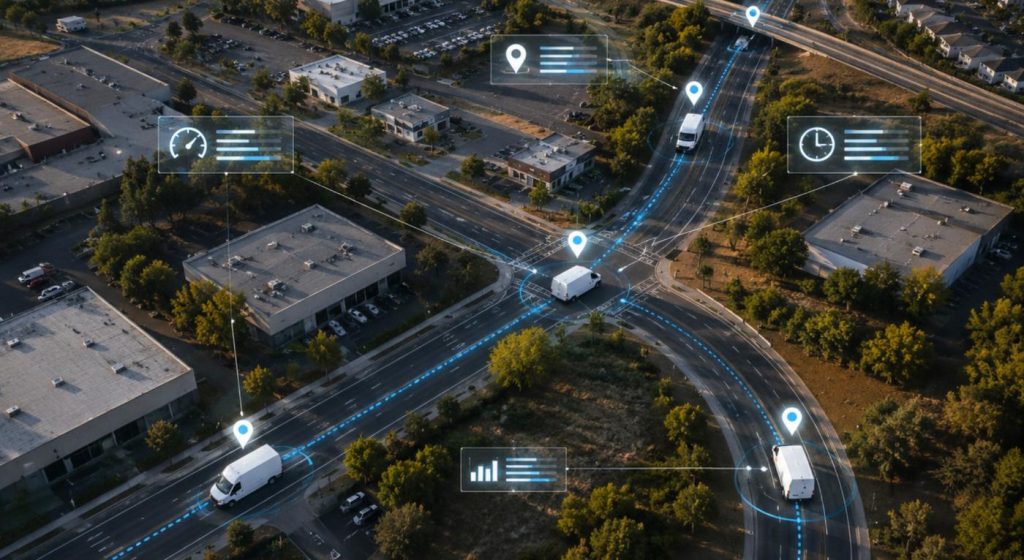
Telematics systems collect and organize vehicle information such as location, mileage, trips, maintenance data, and certain driving events. The available information depends on the vehicle and telematics platform, but the goal is generally the same: give businesses a clearer picture of what’s happening across their fleet.
For plumbing, HVAC, electrical, construction, delivery, and other field-service businesses, that information can help answer practical questions about vehicle use.
What Is Fleet Telematics?
Fleet telematics combines vehicle data with communication technology to make information about a vehicle available through a fleet-management platform.
Depending on the system, businesses may be able to view information such as:
- Vehicle location
- Mileage
- Trip history
- Vehicle health information
- Maintenance reminders
- Idling
- Certain driving events
- Vehicle utilization
Not every system or vehicle provides the same information, so businesses should compare available features before choosing a platform.
Start With Mileage and Vehicle Utilization
One of the simplest pieces of fleet data can also be one of the most useful: how much each vehicle is actually being driven.
Imagine a business with eight service vehicles. Some may accumulate significantly more mileage than others because of technician assignments, territories, or the type of work they’re used for.
Looking at mileage and utilization across the commercial fleet can help an owner identify those differences. That information can be useful when planning maintenance, assigning vehicles, or deciding whether the business’s current fleet matches its workload.
The goal isn’t necessarily to maximize the mileage of every vehicle. A specialized truck may be used less frequently because it has a specific purpose.
Use Vehicle Data to Support Maintenance Planning
Maintenance becomes more complicated as a fleet grows.
Instead of relying only on memory or a spreadsheet, some telematics systems can provide mileage and vehicle-health information that helps businesses keep maintenance records and schedules organized.
Telematics does not replace the manufacturer’s recommended maintenance schedule, inspections, or a qualified technician. It simply provides another source of information that a fleet manager can use.
Maintenance requirements should always be based on the specific vehicle, its operating conditions, and manufacturer recommendations.
Don’t Track Data Just Because You Can
Modern fleet systems can produce a lot of information. That doesn’t mean every business needs to monitor every available metric.
Start with the questions you’re actually trying to answer.
- Are vehicles receiving maintenance when they should?
- Are some trucks accumulating substantially more mileage than others?
- How much unnecessary idle time is occurring?
- Are certain vehicles rarely being used?
Focusing on a few useful measurements can make fleet data easier to act on instead of creating another dashboard nobody has time to review.
Why Western Washington Businesses Work With Jet Chevrolet
Located in Federal Way along the I-5 corridor, Jet Chevrolet works with commercial customers throughout Western Washington, including Federal Way, Tacoma, Kent, Auburn, Puyallup, Olympia, Seattle, Bellevue, Renton, Everett, and Lynnwood.
As part of Dinsmore Auto Group, Jet Chevrolet is locally owned and family operated. Our commercial team works with businesses to evaluate vehicle options based on their fleet and operational needs.
Do More. Save More. Experience MORE.
Connect with the Jet Chevrolet team at (253) 336-4216 to discuss your next commercial vehicle.
Final Thoughts
Fleet telematics is ultimately a tool. Its value depends on what information a business collects and what it does with that information.
For growing fleets, tracking a few practical measurements such as mileage, utilization, maintenance information, and idle time can provide a clearer picture of how vehicles are being used and help inform future fleet decisions.
Connect with us


- August 2026
- July 2026
- June 2026
- May 2026
- April 2026
- March 2026
- February 2026
- January 2026
- December 2025
- November 2025
- October 2025
- September 2025
- August 2025
- July 2025
- June 2025
- May 2025
- April 2025
- March 2025
- February 2025
- January 2025
- November 2024
- October 2024
- September 2024
- August 2024
- July 2024
- June 2024
- May 2024
- April 2024
- March 2024
- February 2024
Archives
- Chevrolet near me
- Chevrolet Safety
- Chevrolet Silverado
- Chevrolet Trailblazer
- Chevrolet Trax
- Chevy Blazer EV
- Chevy Bolt
- Chevy Colorado
- Chevy Equinox EV
- Chevy Finance
- Chevy Silverado EV
- Chevy SUV
- Chevy Tahoe
- Commercial Fleet
- Federal Way Chevrolet Dealer
- Federal Way Chevrolet Service
- Federal Way Used Cars
- Jet Chevrolet
- Jet Chevrolet Service
- Uncategorized