




For business owners across the Puget Sound, fleet vehicles are easily among the most important assets they own.
Whether you’re running a plumbing company in Kent, an HVAC crew in Bellevue, or a landscaping company covering the Tacoma-Puyallup corridor, your vehicles are often the lifeblood of your company. They carry your crew, your tools and your reputation to every single job site.
Yet many businesses unknowingly make fleet decisions that quietly cost them thousands of dollars each year.
The reality is that most of these mistakes can be avoided with proper planning.
Let’s look at five of the most common fleet mistakes we see across Western Washington, and how successful businesses avoid them.
Mistake #1: Keeping Vehicles Too Long
This is by far the most common fleet mistake. Many business owners view a paid-off vehicle as “free money.”
Unfortunately, older vehicles are rarely free. In fact, they quickly become more expensive than newer vehicles.
The Hidden Costs of Aging Fleet Vehicles
As vehicles age, businesses frequently experience:
- Frequent and unpredictable breakdowns
- Higher repair bills
- Increased downtime
- Lower fuel efficiency
- More missed appointments
- Reduced employee productivity
A service truck that spends two days in a repair shop isn’t generating revenue.
For a plumbing company, HVAC contractor, or electrical business, a single vehicle outage can impact multiple customer appointments and create scheduling headaches for the entire team.
Smart Fleet Owners Think Differently
Rather than focusing solely on whether a vehicle is paid off, successful fleet managers evaluate:
- Repair costs
- Reliability
- Downtime history
- Productivity losses
- Overall operating expenses
Sometimes replacing a vehicle before major problems begin is the more cost-effective decision.
Mistake #2: Buying the Wrong Vehicle for the Job
Many businesses purchase vehicles based on price alone, but the cheapest vehicle isn’t always the most economical vehicle over several years.
Example: Plumbing Companies
A residential service plumber will always be more productive in a properly organized cargo van than a standard pickup truck.
Why?
Because a van allows them to:
- Access inventory faster
- Store more tools
- Stay organized
- Protect equipment from weather
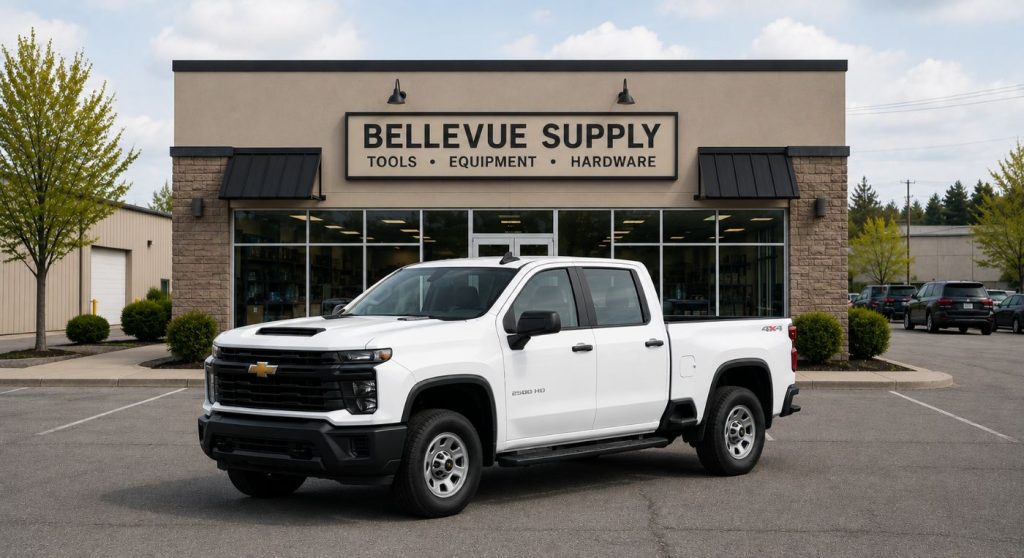
Similarly, a construction-focused plumbing contractor may benefit more from a Silverado 2500 HD or Silverado 3500 HD because of towing and payload requirements.
Matching the Vehicle to the Work
Before purchasing any fleet vehicle, ask:
- What type of work does this employee perform?
- What equipment do they carry?
- How many service calls do they make daily?
- Do they tow equipment?
- Do they operate in urban or construction environments?
The answers often determine the best fleet solution.
Mistake #3: Ignoring Total Cost of Ownership
If you are only looking at the monthly payment when acquiring a vehicle, you are missing the bigger picture.
While payment is important, it rarely tells the full story.
Total Cost of Ownership Includes:
- Purchase price
- Fuel costs
- Maintenance expenses
- Repair costs
- Downtime
- Insurance
- Productivity impact
A vehicle with a lower purchase price may save money at first, but it actually costs more over time. For example, an older used vehicle may require significantly more maintenance and repairs than a newer commercial vehicle.
Over several years, those expenses can add up quickly.
Successful Businesses Look Long-Term
The best fleet decisions prioritize long-term operating costs over short-term savings. Evaluating the true lifecycle cost of a vehicle is how successful companies protect their margins for the long haul.
Mistake #4: Failing to Standardize the Fleet
As companies grow, vehicle purchases often happen one at a time.
One employee gets a van. Another gets a truck. Someone else drives a completely different vehicle.
Over time, businesses end up with a fleet that lacks consistency.
Why This Creates Problems
A mixed fleet can lead to:
- More parts inventory requirements
- Increased maintenance complexity
- Driver training challenges
- Reduced purchasing efficiency
Benefits of Fleet Standardization
Many successful businesses standardize around a few vehicle types.
This can provide:
- Easier maintenance
- Faster repairs
- Simplified driver training
- Better purchasing leverage
- Stronger company branding
Standardizing around a few specific vehicle types simplifies everything, and is one reason why many growing companies choose a fleet strategy rather than purchasing vehicles individually.
Mistake #5: Waiting Until a Vehicle Fails Before Replacing It
Many business owners operate vehicles until they can no longer be repaired economically.While this may seem financially responsible, it often creates unnecessary risk for businesses.
Emergency Replacements Are Expensive
When a vehicle suddenly fails:
- Inventory may be limited
- Decisions become rushed
- Productivity suffers
- Projects may be delayed
Businesses often end up purchasing whatever is available instead of selecting the vehicle that best fits their needs.
Create a Fleet Replacement Plan
The most successful companies build replacement schedules before vehicles become a problem.
This allows business owners to:
- Budget appropriately
- Evaluate options carefully
- Maintain operational continuity
- Reduce downtime risks
Fleet planning often creates far better outcomes than fleet emergencies.
Why Fleet Planning Matters More in Western Washington
Businesses throughout the Seattle-Tacoma region face unique operating challenges. Between heavy traffic, long commute times, diverse service territories, and demanding customer expectations, there is an additional pressure on fleet vehicles in this region.
Companies serving:
- Seattle
- Tacoma
- Federal Way
- Kent
- Auburn
- Renton
- Bellevue
- Everett
- Puyallup
- Lynnwood
- Olympia
need reliable vehicles capable of supporting daily operations across a wide geographic area.
For many businesses, especially those in these cities, fleet reliability directly impacts customer satisfaction and profitability.
How Local Businesses Are Taking a More Strategic Approach
Today’s successful fleet owners don’t simply buy vehicles, they build fleet strategies.
That strategy often includes:
- Vehicle lifecycle planning
- Replacement schedules
- Driver requirements
- Equipment needs
- Growth projections
- Total cost analysis
The goal is simple:
Keep employees productive and vehicles generating revenue.
Why Businesses Throughout Western Washington Turn to Jet Chevrolet
Fleet purchases aren’t just about selecting a vehicle.
They’re about finding a long-term partner who understands commercial operations.
Located in Federal Way along the I-5 corridor, Jet Chevrolet serves businesses throughout Western Washington, including Seattle, Tacoma, Kent, Auburn, Renton, Bellevue, Everett, Puyallup, Lynnwood, Olympia, and surrounding communities.
Its central location makes it convenient for businesses throughout the Puget Sound region to access commercial vehicle inventory and fleet resources.
As part of Dinsmore Auto Group, Jet Chevrolet operates with a philosophy that reflects its commitment to local businesses:
Do More. Save More. Experience MORE.
The Dinsmore family remains actively involved in the business and understands the important role local companies play in building strong communities.
Whether supporting plumbers, electricians, HVAC contractors, landscapers, construction firms, municipalities, or delivery businesses, helping local companies succeed remains a core priority.
Ready to upgrade your service fleet? Email or call our commercial team to discuss vehicle availability and upfitting options for your trade.
Final Thoughts
Fleet vehicles are often one of the largest investments a business makes.
Unfortunately, many companies unknowingly lose thousands of dollars each year due to preventable fleet mistakes.
Avoiding these common issues can help businesses:
- Improve productivity
- Reduce downtime
- Lower operating costs
- Support future growth
- Better serve customers
The most successful companies view fleet management as a strategic business decision, not simply a vehicle purchase.
Because when your fleet is operating efficiently, your employees can accomplish more, your customers receive better service, and your business is positioned for long-term success.
And that’s what it truly means to do more, save more, and experience more.
Ready to stop reacting to vehicle headaches and start optimizing your bottom line?
Give our commercial team a call at (253) 336-4216. Let’s sit down, review your current lineup, and build a high-efficiency strategy for your business
Connect with us


- August 2026
- July 2026
- June 2026
- May 2026
- April 2026
- March 2026
- February 2026
- January 2026
- December 2025
- November 2025
- October 2025
- September 2025
- August 2025
- July 2025
- June 2025
- May 2025
- April 2025
- March 2025
- February 2025
- January 2025
- November 2024
- October 2024
- September 2024
- August 2024
- July 2024
- June 2024
- May 2024
- April 2024
- March 2024
- February 2024
Archives
- Chevrolet near me
- Chevrolet Safety
- Chevrolet Silverado
- Chevrolet Trailblazer
- Chevrolet Trax
- Chevy Blazer EV
- Chevy Bolt
- Chevy Colorado
- Chevy Equinox EV
- Chevy Finance
- Chevy Silverado EV
- Chevy SUV
- Chevy Tahoe
- Commercial Fleet
- Federal Way Chevrolet Dealer
- Federal Way Chevrolet Service
- Federal Way Used Cars
- Jet Chevrolet
- Jet Chevrolet Service
- Uncategorized