





Many business owners don’t like hearing that statement.
But for many growing companies throughout Seattle, Tacoma, Federal Way, Kent, Auburn, Renton, Bellevue, Everett, and Western Washington, it’s true.
The owner is:
- Taking customer calls
- Handling scheduling
- Solving employee issues
- Managing vendors
- Approving purchases
- Quoting jobs
- Putting out fires
The business may be generating revenue.
It may even be growing.
But if everything depends on one person, growth eventually hits a ceiling.
One of the biggest transitions a business owner must make is moving from being the person who does the work to the person who builds the system.
The Trap Most Business Owners Fall Into
Most companies start with a skilled technician.
A great plumber starts a plumbing company. A talented electrician launches an electrical business. An experienced HVAC technician opens their own shop.
At first, this works well.
The owner is the best employee, the most experienced technician, the smoothest salesperson, the primary problem solver.
Then the company grows, and the same strengths that created success begin limiting growth.
Why Growth Becomes Harder
Many owners believe growth will make things easier. Often the opposite happens.
The business gets:
- More customers
- More employees
- More vehicles
- More paperwork
- More complexity
Without systems, every new customer and every new employee increases pressure on the owner until eventually the owner becomes the bottleneck.
Signs You May Be the Bottleneck
Ask yourself:
- Can employees make decisions without me?
- Can jobs be scheduled without me?
- Can customers get answers without me?
- Can purchasing happen without me?
- Could I take two weeks off tomorrow?
Most owners know the answer immediately.
If the answer is no, the business is probably too dependent on one person.
The Real Cost of Being Involved in Everything

Many owners take pride in being involved, and it’s understandable, the business is personal, however, involvement often becomes expensive.
Every time an employee must wait for approval: Work slows down.
Every time the owner solves a problem someone else could solve: Capacity shrinks.
Every time a decision must flow through one person: Growth becomes harder.
The goal is not to become uninvolved, it’s to become strategically involved.
Systems Create Freedom
The word “systems” sounds boring, however, systems create consistency which brings scalability.
Examples include:
Hiring Systems
- How do you recruit?
- How do you interview?
- How do you onboard?
Customer Service Systems
- How are calls handled?
- How are complaints resolved?
- How are follow-ups managed?
Fleet Systems
- How are vehicles assigned?
- How is maintenance tracked?
- How are replacement decisions made?
The businesses that scale successfully often have clear answers to these questions.
Why Employees Need Systems
Many owners become frustrated when employees don’t perform tasks exactly as expected. The question is: Have those expectations been documented?
Employees cannot consistently follow processes that only exist in the owner’s head.
When systems are documented:
- Training improves
- Accountability improves
- Performance improves
The business becomes less dependent on memory and more dependent on process.
The Power of Standard Operating Procedures

Many successful businesses create simple Standard Operating Procedures (SOPs).
These are not complex manuals, they’re often simple checklists.
Examples include:
New Customer Procedure
- Step 1
- Step 2
- Step 3
Vehicle Maintenance Procedure
- Step 1
- Step 2
- Step 3
Job Completion Procedure
- Step 1
- Step 2
- Step 3
Simple systems often outperform complicated ones.
Why This Matters for Growth
Imagine two companies.
Company A relies entirely on the owner. Company B operates using documented systems.
- Which company can add employees more easily?
- Which company can expand into new markets?
- Which company can maintain consistency?
Systems don’t eliminate challenges, they reduce dependency. When you do that, you create growth opportunities.
The Vacation Test
One of the simplest business assessments is what many consultants call the Vacation Test.
Ask yourself:
Could I leave for two weeks without creating major problems?
Not because you want to. Because it’s a useful measurement.
If the business cannot function without daily intervention from the owner, that often reveals opportunities for improvement.
What Successful Owners Focus On
As businesses grow, many successful owners shift their focus.
They spend less time: Working in the business.
And more time: Working on the business.
That includes:
- Strategy
- Hiring
- Culture
- Financial planning
- Growth initiatives
- Process improvement
These activities often create far more value than solving day-to-day operational issues.
The Difference Between Busy and Productive
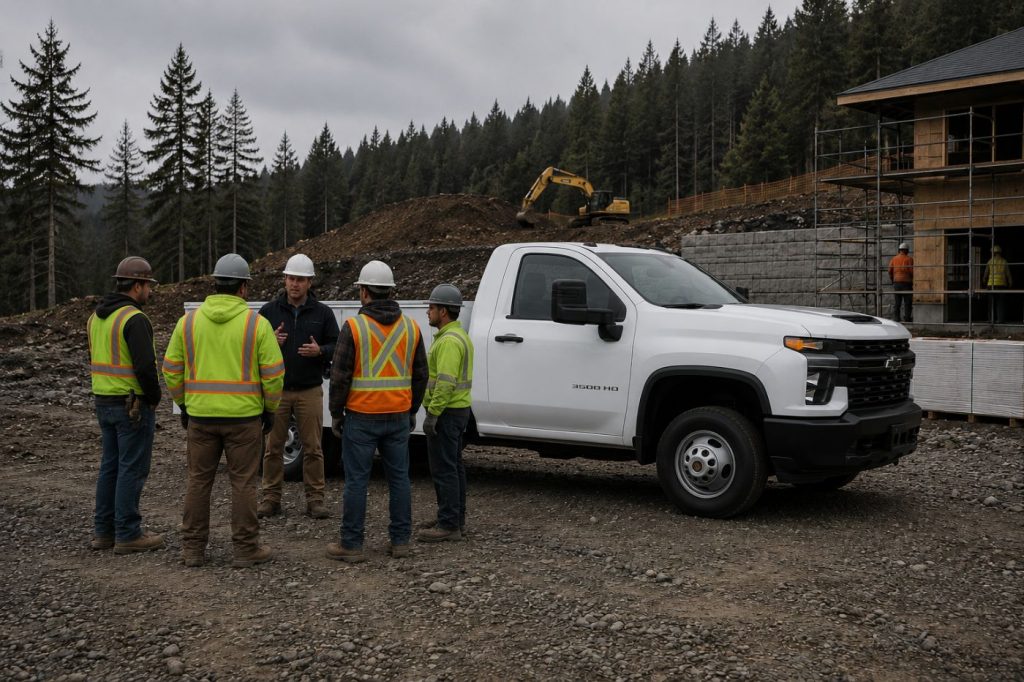
Many owners are incredibly busy, but that doesn’t always mean they’re productive.
A packed schedule often feels successful, however, constantly solving problems can prevent owners from addressing larger opportunities.
The goal isn’t to be busy.
The goal is to create value.
Sometimes that means stepping back long enough to improve the systems that drive the business forward.
Lessons From Growing Businesses Across Western Washington
Many successful contractors throughout Seattle, Tacoma, Federal Way, Bellevue, Kent, Auburn, Everett, and the surrounding region share a common trait.
They gradually reduce dependence on the owner.
Not because the owner becomes less important, but because the business becomes stronger.
Employees become empowered. Processes become repeatable. Growth becomes sustainable.
Supporting Businesses That Want to Grow
At Jet Chevrolet in Federal Way, conversations with business owners often extend beyond vehicles.
Owners frequently discuss:
- Growth
- Hiring
- Operational challenges
- Efficiency
- Scaling
These are the realities local businesses face every day.
As a locally owned and family-operated member of the Dinsmore Auto Group, the team understands the importance of building businesses that can grow, adapt, and thrive over time.
Their philosophy is simple:
Do More. Save More. Experience MORE.
For many business owners, doing more begins with creating systems that allow the business to operate effectively, whether the owner is present or not.
Take a strategic approach and contact Jet Chevrolet today at (253) 336-4500 to discuss your business’s vehicle utility needs and secure the assets necessary to drive your operations forward.
Final Thoughts
Most businesses begin with a talented individual.
The businesses that achieve long-term success evolve beyond that.
They create systems, develop leaders, document processes, and reduce dependency.
Eventually, they build organizations capable of growing beyond the capacity of any one person.
That’s when a business truly begins to scale.
Because owning a business should create freedom.
Not another job.
Connect with us


- August 2026
- July 2026
- June 2026
- May 2026
- April 2026
- March 2026
- February 2026
- January 2026
- December 2025
- November 2025
- October 2025
- September 2025
- August 2025
- July 2025
- June 2025
- May 2025
- April 2025
- March 2025
- February 2025
- January 2025
- November 2024
- October 2024
- September 2024
- August 2024
- July 2024
- June 2024
- May 2024
- April 2024
- March 2024
- February 2024
Archives
- Chevrolet near me
- Chevrolet Safety
- Chevrolet Silverado
- Chevrolet Trailblazer
- Chevrolet Trax
- Chevy Blazer EV
- Chevy Bolt
- Chevy Colorado
- Chevy Equinox EV
- Chevy Finance
- Chevy Silverado EV
- Chevy SUV
- Chevy Tahoe
- Commercial Fleet
- Federal Way Chevrolet Dealer
- Federal Way Chevrolet Service
- Federal Way Used Cars
- Jet Chevrolet
- Jet Chevrolet Service
- Uncategorized