





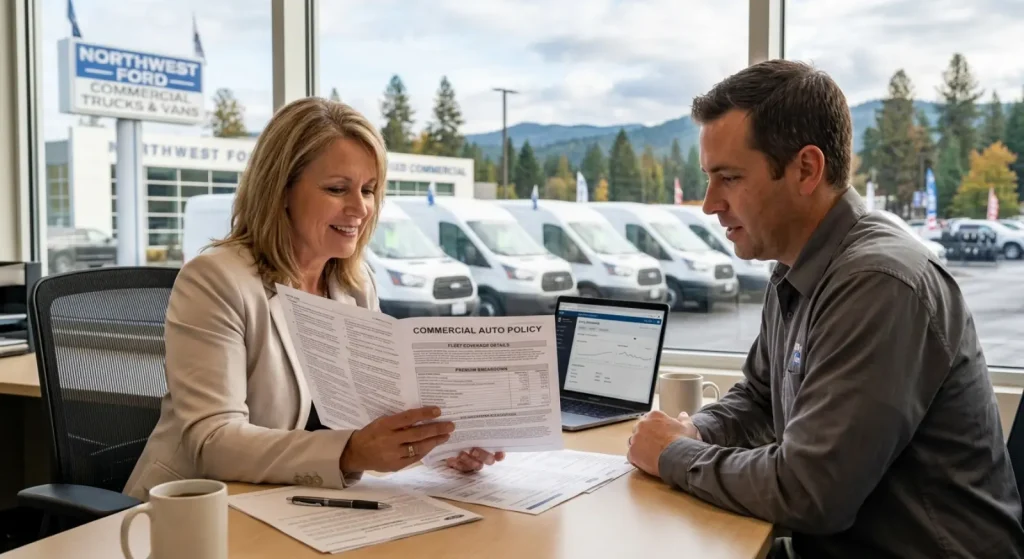
Fleet insurance gets treated as an afterthought in most vehicle purchase decisions, handled after the paperwork is signed instead of before. That order should be reversed. Coverage gaps and unexpected premium costs are far easier to manage when you understand them before the vehicle is on the road.
Commercial Auto Insurance Basics
Personal auto insurance doesn’t cover vehicles used for business purposes, even part time. Personal policies are priced and written for everyday, non-business driving, and most exclude or limit coverage the moment a vehicle is regularly used to haul tools, materials, or employees, even part time. Commercial auto coverage is a separate, dedicated policy built for exactly that kind of use, and it typically costs more than personal coverage because of the higher mileage, liability exposure, and wear that come with running a business vehicle.
Coverage usually includes liability protection, physical damage coverage for the vehicle itself, and medical payments coverage for the driver and any passengers. Depending on your trade, you may also need coverage for tools and equipment carried in the vehicle, which standard auto policies often exclude.
What Affects Your Premium
Several factors drive commercial auto premiums beyond the vehicle itself: driver records, the radius of operation, how the vehicle is used, claims history, and the value of equipment carried inside. A fleet with consistent driver training and clean records typically qualifies for better rates than one with frequent turnover and inconsistent oversight.
Common Coverage Gaps
Many owners discover gaps only after a claim. Equipment and tools stored inside a vehicle aren’t always covered under standard commercial auto policies, and may require a separate inland marine policy. Vehicles used outside their stated radius of operation can also create coverage disputes at the worst possible time.
Reviewing your policy annually, especially as your fleet grows or your service area expands, helps catch these gaps before they become a problem.
Insurance conversations go a lot smoother when you walk in with a checklist instead of trying to remember every coverage category on the spot. We built a printable gap-finder you can fill out with your agent, covering the coverage types and premium factors this article walks through.
Bundling and Fleet Discounts
As your fleet grows beyond a handful of vehicles, many insurers offer fleet policies that simplify management and often reduce per-vehicle costs compared to insuring each vehicle individually. This becomes worth exploring once your fleet reaches roughly five or more vehicles.
Have questions about insuring a new fleet vehicle? Connect with our commercial team at (253) 336-4216, and we can point you toward resources to help you find the right coverage before you drive off the lot.
Why Western Washington Businesses Trust Jet Chevrolet With Their Fleet Decisions
Located in Federal Way along the I-5 corridor, Jet Chevrolet supports fleet customers across Western Washington, including:
- South Sound & Local: Federal Way, Tacoma, Kent, Auburn, Puyallup, Olympia
- Greater Seattle & North Sound: Seattle, Bellevue, Renton, Everett, Lynnwood
As part of Dinsmore Auto Group, Jet Chevrolet stays family-operated, with a team that looks at the full picture of vehicle ownership, not just the purchase, including the coverage that protects it. They embrace the philosophy:
Do More. Save More. Experience MORE.
For business owners insuring a growing fleet, that means a partner who helps you think through every cost of ownership, including the ones that aren’t on the price tag.
Talk to a commercial vehicle expert at (253) 336-4216 about what your next fleet purchase means for your insurance needs.
Final Thoughts
Fleet insurance isn’t a formality. It’s protection for one of your business’s most valuable operating assets. Understanding your coverage before you buy, rather than after a claim, is one of the simplest ways to avoid an expensive surprise down the road.
Disclaimer
Jet Chevrolet isn’t a law firm or insurance agency, and this article isn’t legal or insurance advice. Laws and policies vary, so talk to a licensed agent or attorney about your specific situation. Our commercial team is happy to point you toward trusted local professionals.
Connect with us


- July 2026
- June 2026
- May 2026
- April 2026
- March 2026
- February 2026
- January 2026
- December 2025
- November 2025
- October 2025
- September 2025
- August 2025
- July 2025
- June 2025
- May 2025
- April 2025
- March 2025
- February 2025
- January 2025
- November 2024
- October 2024
- September 2024
- August 2024
- July 2024
- June 2024
- May 2024
- April 2024
- March 2024
- February 2024
Archives
- Chevrolet near me
- Chevrolet Safety
- Chevrolet Silverado
- Chevrolet Trailblazer
- Chevrolet Trax
- Chevy Blazer EV
- Chevy Bolt
- Chevy Colorado
- Chevy Equinox EV
- Chevy Finance
- Chevy Silverado EV
- Chevy SUV
- Chevy Tahoe
- Commercial Fleet
- Federal Way Chevrolet Dealer
- Federal Way Chevrolet Service
- Federal Way Used Cars
- Jet Chevrolet
- Jet Chevrolet Service
- Uncategorized