





Eliminate lost billable hours. Learn how to configure high-density bin layouts and custom parts drawers for your electrical service fleet.
An electrician’s service van can carry hundreds of small parts, tools, wire, fittings, and supplies. Without a consistent storage system, finding one breaker, connector, or tester can take longer than it should.
Think of that lost time as the “where is it” tax. A few minutes spent searching may not seem significant on one service call, but repeated throughout the workweek, disorganization can become a real productivity issue.
That’s why organization should be part of the vehicle setup, not an afterthought. The right electrician van shelving and storage layout can make frequently used parts easier to access, help keep inventory organized, and give technicians a more functional workspace throughout the day.
Why Electrician Vans Need More Than Open Shelving
General-purpose shelving works well for larger tools and equipment, but electrical contractors also carry a large number of small components.
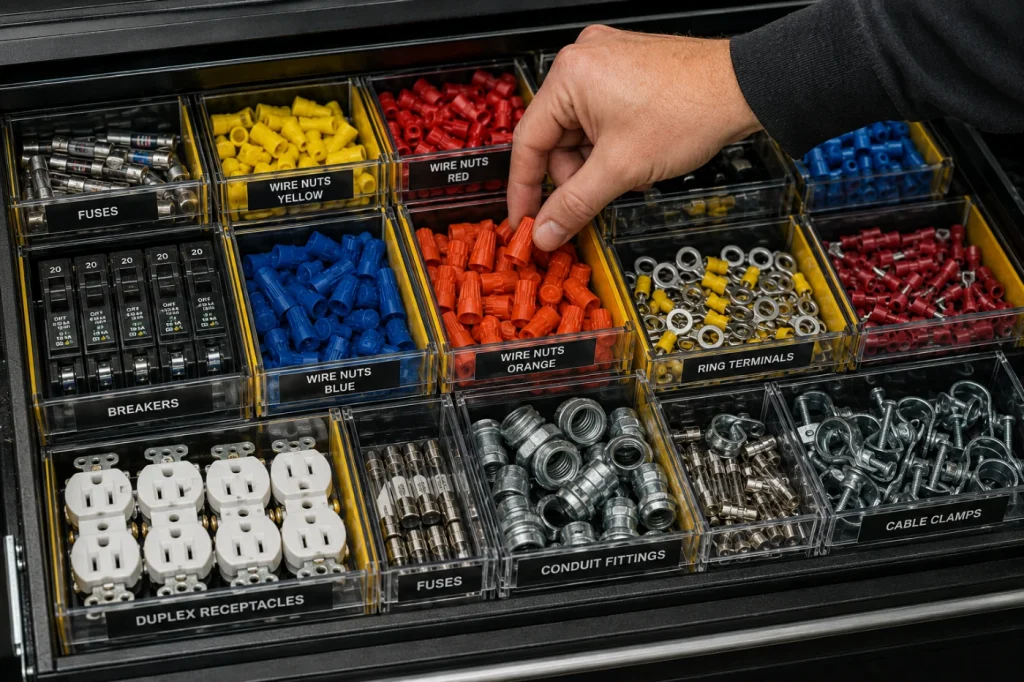
Breakers, connectors, switches, receptacles, fittings, fasteners, and other small parts are easier to manage when they have dedicated storage. Drawers, divided bins, and removable parts cases can help keep these items separated and secured while the vehicle is moving.
The goal isn’t simply to fit more into the van. It’s to give the items your technicians use every day a consistent, easy-to-find location.
Use Bins and Labels to Simplify Parts Storage
A simple labeling system can make a busy service van much easier to navigate.
Parts can be grouped by type, job, or frequency of use. Some contractors also use different bin colors for different categories. For example, one color might identify residential devices while another is reserved for breakers or wire connectors.
The specific colors aren’t important. What matters is using a consistent system so technicians know where to look and can more easily identify what needs to be restocked.
Put Frequently Used Items Within Easy Reach
Think about what a technician reaches for during a typical service call.
Everyday items such as testers, electrical tape, common connectors, and frequently used devices generally make sense near an accessible door or at a comfortable working height. Less frequently used inventory can be stored farther inside the cargo area.
Heavier tools and equipment should be stored securely in locations appropriate for their size and weight. The overall layout should also account for the vehicle manufacturer’s payload limits, axle ratings, cargo securement requirements, and upfitter recommendations.
A Three-Zone Electrical Van Layout
There isn’t one perfect electrician van layout. Residential service electricians, commercial contractors, and installation crews may carry very different inventories.
A useful starting point is to divide the cargo area into zones based on how technicians actually use the vehicle.
Zone 1: Quick-Access Items
Use the area near the side or rear door for items technicians reach for frequently.
Zone 2: Small Parts and Inventory
Shelving, divided bins, shallow drawers, and parts cases can be used for small components. Clear labels make it easier to maintain a consistent system.
Zone 3: Larger Tools and Equipment
Reserve appropriate secured storage for heavier tools and bulky equipment. The exact placement should be determined as part of the vehicle’s overall upfit and weight-distribution plan.
This type of layout can be adapted to the technician, vehicle, and type of electrical work rather than forcing every crew into the same setup.
Choosing an Electrical Van Upfit
Before ordering shelving or storage equipment, take inventory of what your technicians actually carry.
Consider:
- Which parts are used on nearly every call?
- Which tools need to be accessible from outside the van?
- How much small-parts storage is required?
- Which equipment needs lockable storage?
- How much payload capacity remains after the upfit is installed?
Answering these questions first can help you build an electrical service van around the way your crew actually works.
Need help planning your next electrical service vehicle? Connect with the Jet Chevrolet team at (253) 336-4216 to discuss your commercial vehicle needs.
Final Thoughts
The “where is it” tax comes down to something simple: technicians shouldn’t have to repeatedly search through a cluttered van for the parts and tools they use every day.
Shelving, labeled bins, drawers, and dedicated storage zones can make inventory easier to find and the cargo area easier to work from. Build the layout around what your technicians actually carry and how they use the vehicle, and you’ll end up with a more practical mobile workspace.
Connect with us


- August 2026
- July 2026
- June 2026
- May 2026
- April 2026
- March 2026
- February 2026
- January 2026
- December 2025
- November 2025
- October 2025
- September 2025
- August 2025
- July 2025
- June 2025
- May 2025
- April 2025
- March 2025
- February 2025
- January 2025
- November 2024
- October 2024
- September 2024
- August 2024
- July 2024
- June 2024
- May 2024
- April 2024
- March 2024
- February 2024
Archives
- Chevrolet near me
- Chevrolet Safety
- Chevrolet Silverado
- Chevrolet Trailblazer
- Chevrolet Trax
- Chevy Blazer EV
- Chevy Bolt
- Chevy Colorado
- Chevy Equinox EV
- Chevy Finance
- Chevy Silverado EV
- Chevy SUV
- Chevy Tahoe
- Commercial Fleet
- Federal Way Chevrolet Dealer
- Federal Way Chevrolet Service
- Federal Way Used Cars
- Jet Chevrolet
- Jet Chevrolet Service
- Uncategorized