





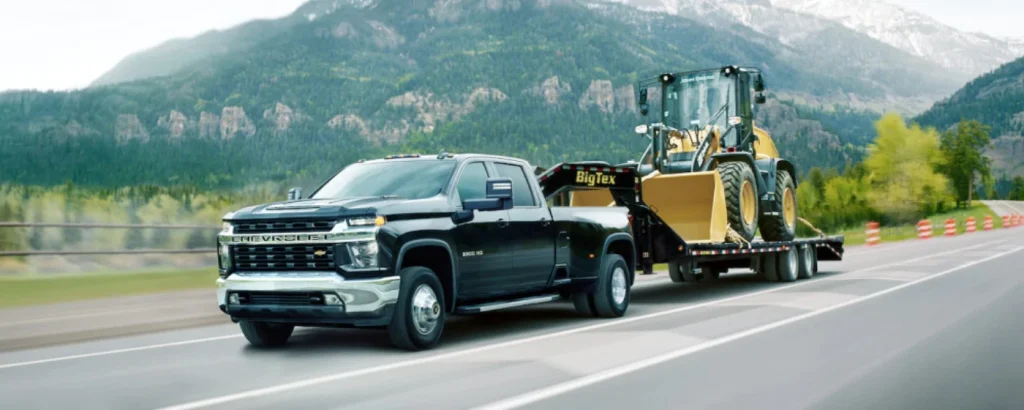
Work trucks and service vans can carry a significant amount of added weight. Passengers, tools, equipment, shelving, materials, cargo, and trailer tongue weight can all contribute to the load placed on a vehicle.
Understanding your vehicle’s weight ratings is an important part of choosing and operating a commercial vehicle. Before loading a work truck or van, businesses should know the manufacturer’s ratings for that specific vehicle and configuration.
Understanding GVWR and Payload Capacity
Gross Vehicle Weight Rating (GVWR) is the maximum allowable weight of a fully loaded vehicle, as specified by the manufacturer. That includes the vehicle itself and everything being carried in or on it.
For a work vehicle, that can include:
- Driver and passengers
- Tools and equipment
- Shelving, racks, and other upfits
- Parts and materials
- Cargo
- Trailer tongue weight when towing
Payload capacity refers to how much weight a vehicle can carry. Published payload figures can vary based on vehicle configuration and installed equipment, so the ratings and labels for the specific vehicle should be used when determining its capacity.
Adding an upfit also matters. Shelving, service bodies, toolboxes, racks, and other permanently installed equipment add weight before the crew’s tools and materials are loaded.
Why GVWR Matters for Commercial Vehicles
GVWR is established by the vehicle manufacturer and should not be exceeded.
It is also used in various vehicle classifications and regulations. However, the rules that apply to a commercial vehicle depend on more than GVWR alone.
Requirements can vary based on factors such as:
- Where the vehicle operates
- Whether the operation involves interstate or intrastate commerce
- The vehicle or combination weight
- What the vehicle is carrying
- How the vehicle is being used
Because federal, state, and local requirements can differ, businesses should determine which regulations apply to their specific operations rather than assuming a particular GVWR automatically triggers the same requirements for every vehicle.
Don’t Forget About Towing and Tongue Weight
When a work truck tows a trailer, there are additional ratings to consider.
Gross Combined Weight Rating (GCWR) is the maximum allowable combined weight specified for the tow vehicle and trailer combination.
Tongue weight is the downward force the trailer places on the hitch. Because that force is carried by the tow vehicle, it must be considered when evaluating the vehicle’s available carrying capacity.
Always follow the vehicle, hitch, and trailer manufacturers’ ratings and instructions.
Calculate Your Work Vehicle’s Load
Before loading a commercial vehicle, start with the ratings for the specific vehicle and account for what your business actually carries.
Vehicle information:
- GVWR
- Actual vehicle weight
- Front and rear Gross Axle Weight Ratings (GAWR)
- GCWR when towing
- Applicable towing and hitch ratings
Added weight:
- Driver and passengers
- Shelving, racks, and other upfits
- Tools and equipment
- Parts and materials
- Cargo
- Trailer tongue weight when applicable
Using the vehicle’s actual weight rather than relying solely on a generic curb-weight figure can provide a better picture of the remaining capacity after equipment and upfits have been added.
Why Western Washington Contractors Work With Jet Chevrolet
Located in Federal Way along the I-5 corridor, Jet Chevrolet works with commercial customers throughout Western Washington, including:
- South Sound & Local: Federal Way, Tacoma, Kent, Auburn, Puyallup, Olympia
- Greater Seattle & North Sound: Seattle, Bellevue, Renton, Everett, Lynnwood
As part of Dinsmore Auto Group, Jet Chevrolet is locally owned and family operated. Our commercial team works with businesses to evaluate vehicle options based on their work and vehicle requirements.
Do More. Save More. Experience MORE.
For contractors and trade businesses, selecting a commercial vehicle means considering how the vehicle will actually be used. Payload, towing requirements, equipment, upfits, and cargo are all relevant when comparing available configurations.
Have questions? Need help choosing a commercial vehicle for your business? Connect with the Jet Chevrolet team at (253) 336-4216 to discuss your commercial vehicle needs.
Final Thoughts
Before putting a truck or van to work, check the ratings for the specific vehicle and account for the passengers, equipment, upfits, materials, and cargo it will carry. When towing, the applicable trailer, hitch, tongue-weight, and combined-weight limits also need to be considered.
The safest approach is simple: use the ratings provided for your specific vehicle and equipment rather than relying on general assumptions or advertised maximums.
Connect with us


- August 2026
- July 2026
- June 2026
- May 2026
- April 2026
- March 2026
- February 2026
- January 2026
- December 2025
- November 2025
- October 2025
- September 2025
- August 2025
- July 2025
- June 2025
- May 2025
- April 2025
- March 2025
- February 2025
- January 2025
- November 2024
- October 2024
- September 2024
- August 2024
- July 2024
- June 2024
- May 2024
- April 2024
- March 2024
- February 2024
Archives
- Chevrolet near me
- Chevrolet Safety
- Chevrolet Silverado
- Chevrolet Trailblazer
- Chevrolet Trax
- Chevy Blazer EV
- Chevy Bolt
- Chevy Colorado
- Chevy Equinox EV
- Chevy Finance
- Chevy Silverado EV
- Chevy SUV
- Chevy Tahoe
- Commercial Fleet
- Federal Way Chevrolet Dealer
- Federal Way Chevrolet Service
- Federal Way Used Cars
- Jet Chevrolet
- Jet Chevrolet Service
- Uncategorized