





Most drivers assume their personal auto insurance follows them everywhere the car goes, including a quick supply run for work. That assumption is one of the most common and most expensive misunderstandings in Washington State auto insurance, and it tends to surface at the worst possible moment: after an accident, when a claim gets denied instead of paid.
If you or your employees ever drive a vehicle for anything work-related, even occasionally, it’s worth understanding where personal coverage ends and business exposure begins.
What Washington State Actually Requires
Washington law requires every registered vehicle owner to carry proof of financial responsibility, most commonly satisfied through a liability insurance policy. The state’s minimum liability limits are commonly written as 25/50/10:
- $25,000 for bodily injury or death to one person in an accident
- $50,000 for bodily injury or death to multiple people in the same accident
- $10,000 for property damage
Washington is a fault-based, or tort, state. The driver responsible for causing an accident is financially responsible for the resulting damages. Insurers are also required to offer personal injury protection (PIP) and uninsured/underinsured motorist (UM/UIM) coverage, though drivers can decline both in writing. Driving without meeting these requirements carries real consequences, including fines, potential registration suspension, and an SR-22 filing requirement that can follow a driver for years.
Where Personal Auto Insurance Stops Covering You
Personal auto policies are priced and written around personal use: commuting, errands, road trips, driving the kids to school. The moment a vehicle starts regularly serving a business purpose, coverage gets more complicated, and in some cases stops applying altogether.
Take an electrician who drives their own truck to job sites every day. Even though the truck is titled in their name, using it consistently for work can put it outside what a personal policy is designed to cover. Generally excluded or heavily scrutinized under a standard personal policy:
- Vehicles owned or titled to a business entity
- Vehicles used to transport people or goods for a fee
- A business’s day-to-day operational vehicles, like a plumbing van or landscaping truck
The Gray Area: Occasional Work Use
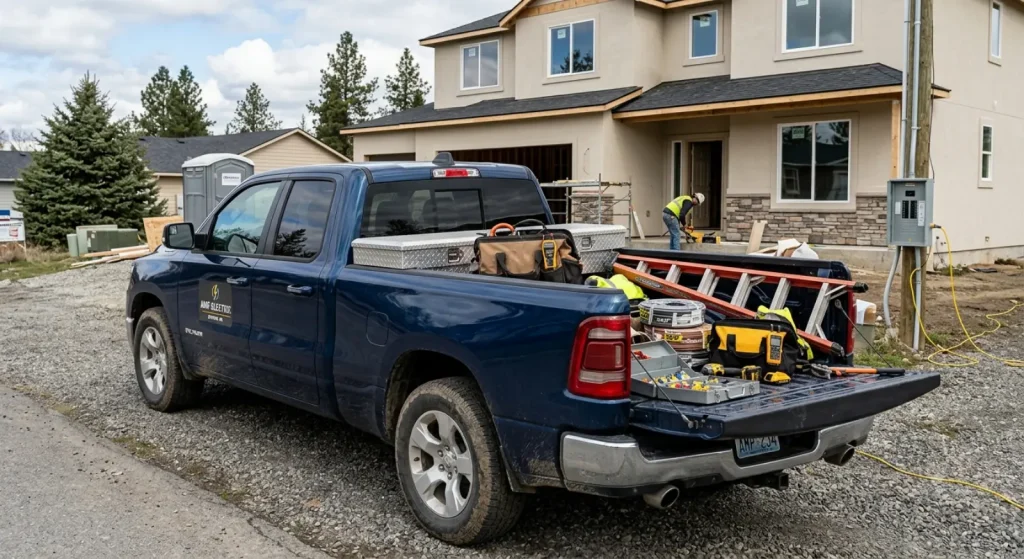
The situation that catches the most people off guard isn’t a business vehicle. It’s a personal vehicle used occasionally for work.
Picture a bookkeeper who drives her own car to drop off a client’s paperwork once a week. That kind of occasional use may not be automatically excluded on every policy, but coverage here varies significantly by insurer, and claims involving any business use tend to draw closer scrutiny. An insurer that finds out a vehicle was being used for work at the time of a claim may reduce, delay, or deny coverage entirely, depending on the specific policy language.
Why This Matters More for Business Owners
If your business owns any vehicles, even one work truck, that vehicle needs to be insured on a commercial auto policy, not a personal one. Commercial coverage is built for the realities of business use: higher mileage, multiple drivers, tools and equipment on board, and greater liability exposure if something goes wrong.
It’s just as important to think about the vehicles your business doesn’t own. Consider a landscaping company whose crew leader occasionally uses his own pickup to haul supplies between job sites. If he’s in an accident while running that errand, the business may still carry liability exposure, even though it doesn’t own the truck. Many businesses in this position add hired and non-owned auto (HNOA) coverage specifically to close that gap, since a personal auto policy alone often won’t defend the business if it gets pulled into a claim.
A Few Signs It’s Time to Have This Conversation
You may be relying on the wrong kind of coverage if any of the following sound familiar:
- Your team regularly uses personal vehicles for work errands or job sites
- Your business owns a vehicle that’s still insured under someone’s personal policy
- You’ve never asked your insurance agent directly whether business use is covered
- Your fleet has grown since your last insurance review
Any one of these is worth a phone call to your insurance provider before it becomes a claim.
Why Western Washington Businesses Trust Jet Chevrolet
Located in Federal Way along the I-5 corridor, Jet Chevrolet supports fleet customers across Western Washington, including:
- South Sound & Local: Federal Way, Tacoma, Kent, Auburn, Puyallup, Olympia
- Greater Seattle & North Sound: Seattle, Bellevue, Renton, Everett, Lynnwood
As part of Dinsmore Auto Group, Jet Chevrolet stays family-operated, with a team that looks at the full picture of vehicle ownership, not just the purchase, including the coverage that protects it. They embrace the philosophy:
Do More. Save More. Experience MORE.
For business owners insuring a growing fleet, that means a partner who helps you think through every cost of ownership, including the ones that aren’t on the price tag.
Talk to a commercial vehicle expert at (253) 336-4216 about what your next fleet purchase means for your insurance needs.
Final Thoughts
A personal auto policy is built for personal driving, and a commercial vehicle needs commercial coverage. The line between the two isn’t always obvious, especially for a business just starting to grow its fleet, which is exactly why it’s worth confirming with a licensed professional rather than assuming.
Understanding the gap between personal and business auto coverage now, before an accident happens, is one of the simplest ways to protect your business from a costly surprise later.
Disclaimer
Jet Chevrolet isn’t a law firm or insurance agency, and this article isn’t legal or insurance advice. Laws and policies vary, so talk to a licensed agent or attorney about your specific situation. Our commercial team is happy to point you toward trusted local professionals.
Connect with us


- July 2026
- June 2026
- May 2026
- April 2026
- March 2026
- February 2026
- January 2026
- December 2025
- November 2025
- October 2025
- September 2025
- August 2025
- July 2025
- June 2025
- May 2025
- April 2025
- March 2025
- February 2025
- January 2025
- November 2024
- October 2024
- September 2024
- August 2024
- July 2024
- June 2024
- May 2024
- April 2024
- March 2024
- February 2024
Archives
- Chevrolet near me
- Chevrolet Safety
- Chevrolet Silverado
- Chevrolet Trailblazer
- Chevrolet Trax
- Chevy Blazer EV
- Chevy Bolt
- Chevy Colorado
- Chevy Equinox EV
- Chevy Finance
- Chevy Silverado EV
- Chevy SUV
- Chevy Tahoe
- Commercial Fleet
- Federal Way Chevrolet Dealer
- Federal Way Chevrolet Service
- Federal Way Used Cars
- Jet Chevrolet
- Jet Chevrolet Service
- Uncategorized