




Chevy Traverse and Tahoe: Detailed Feature Comparison
When choosing between the Chevy Traverse and Chevy Tahoe, it's important to understand their distinctions to select the SUV that best fits your needs. From Jet Chevrolet, part of Dinsmore Auto Group, here's a detailed comparison highlighting ten key differences:
1. Size and Dimensions
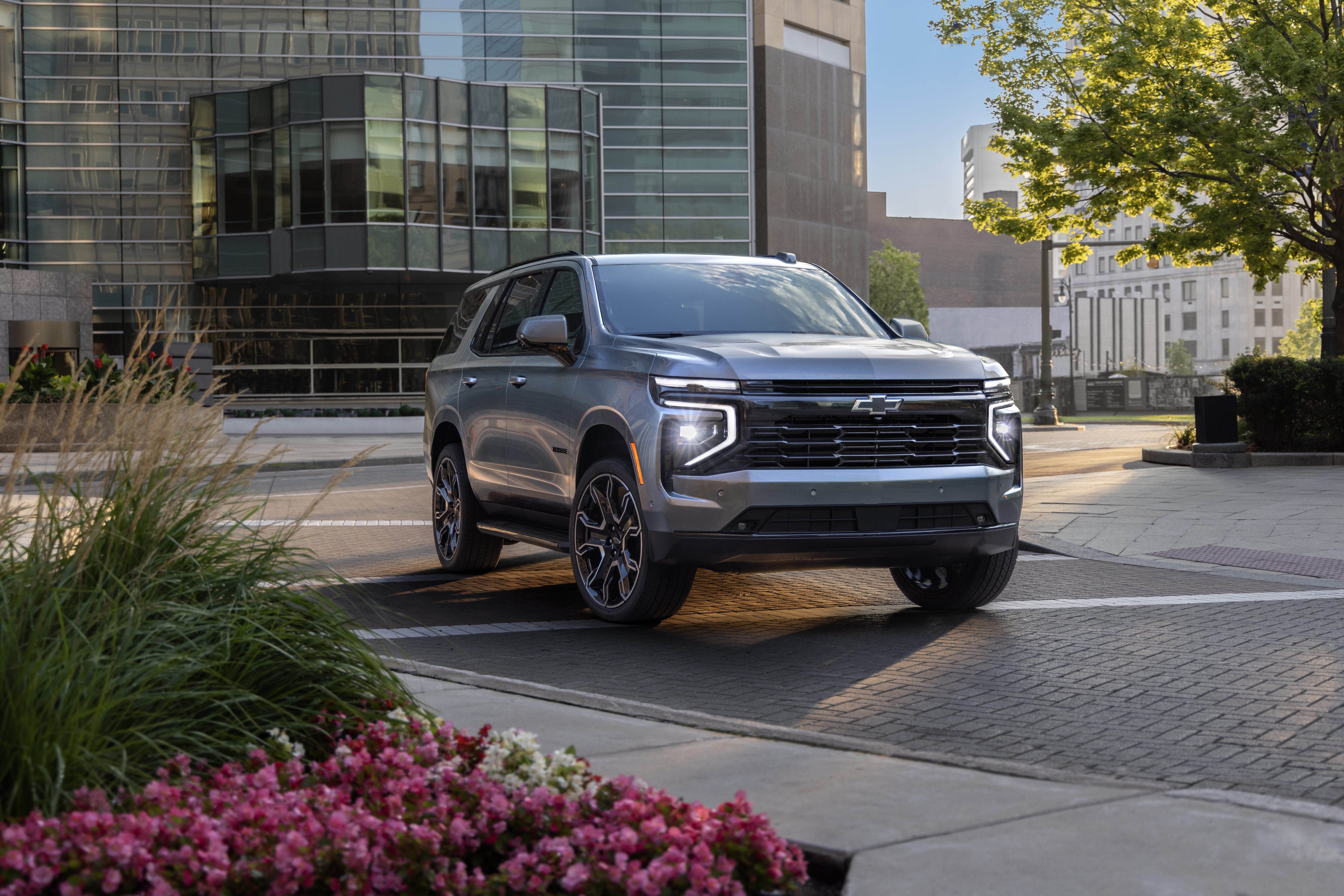
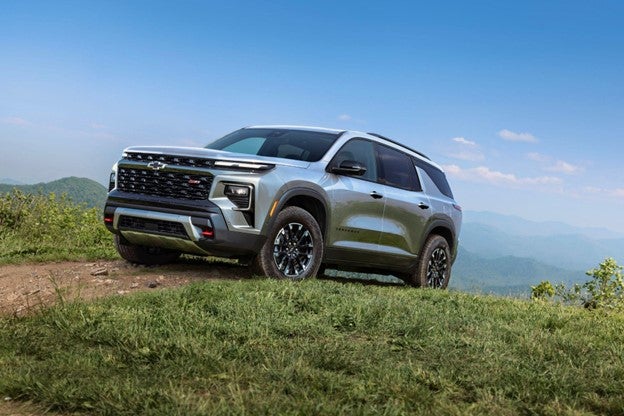
The Chevy Tahoe is a full-size SUV, measuring approximately 210.7 inches in length, 81 inches in width, and 75.8 inches in height. In contrast, the Chevy Traverse is a midsize SUV, with dimensions around 205.9 inches in length, 78.6 inches in width, and 70.7 inches in height. This makes the Tahoe larger overall, offering more interior space.
2. Seating Capacity
The Tahoe can accommodate up to nine passengers, depending on the configuration, making it ideal for larger families or groups. The Traverse offers seating for up to eight passengers, which is suitable for moderately sized families.
3. Cargo Space
In terms of cargo capacity, the Tahoe provides 25.5 cubic feet behind the third row, 72.6 cubic feet with the third row folded, and up to 122.9 cubic feet with both rear rows folded. The Traverse offers 23 cubic feet behind the third row, 57.8 cubic feet with the third row folded, and a maximum of 98.2 cubic feet with both rows folded. Thus, the Tahoe offers more cargo space overall.
4. Towing Capacity
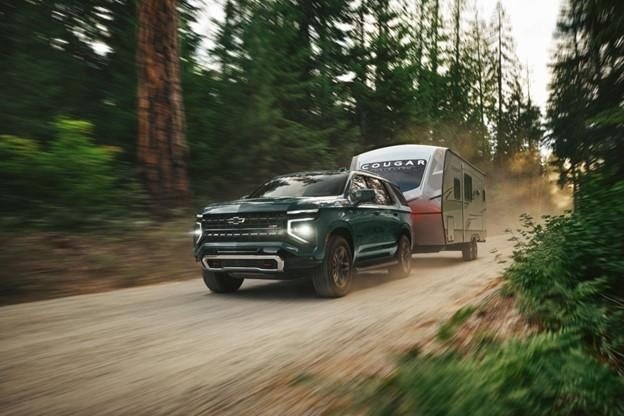
The Tahoe outperforms the Traverse in towing capabilities. When properly equipped, the Tahoe can tow up to 8,400 pounds, thanks to its robust body-on-frame construction. The Traverse, with its unibody design, has a maximum towing capacity of 5,000 pounds. Therefore, for heavy towing needs, the Tahoe is the superior choice.
5. Engine Options
The Tahoe offers multiple engine choices:
● A 5.3L V8 engine producing 355 horsepower and 383 lb-ft of torque.
● A 6.2L V8 engine delivering 420 horsepower and 460 lb-ft of torque.
● A 3.0L Duramax diesel engine with 277 horsepower and 460 lb-ft of torque.
The Traverse comes with a single engine option: a 3.6L V6 engine generating 310 horsepower and 266 lb-ft of torque. The Tahoe's diverse engine lineup offers more power and flexibility.
6. Fuel Efficiency
The Traverse has better fuel economy, achieving an EPA-estimated 18 mpg in the city and 27 mpg on the highway with front-wheel drive. The Tahoe's fuel economy varies by engine choice but generally achieves 15 mpg in the city and 20 mpg on the highway with its base V8 engine. Therefore, the Traverse is more fuel-efficient.
7. Interior Features
Both SUVs are equipped with modern infotainment systems, including touchscreen displays, Apple CarPlay, Android Auto, and available Wi-Fi hotspots. The Tahoe offers more luxury options, such as a larger touchscreen, premium audio systems, and advanced navigation features, providing a more upscale experience.
8. Safety Features
Both vehicles come with standard safety features like forward collision warning, automatic emergency braking, lane-keeping assist, and front pedestrian braking. The Traverse has higher safety ratings from the National Highway Traffic Safety Administration (NHTSA), with an average rating of 4.81 out of 5 stars, compared to the Tahoe's 4 out of 5 stars.
easthillschevrolet.com
9. Price Point
The Traverse is more budget-friendly, with a starting MSRP around $34,500. The Tahoe starts at over $50,000, reflecting its larger size and additional features. So Traverse offers a more affordable option.
10. Performance and Handling
The Traverse, with its unibody construction, offers a smoother ride and car-like handling, making it easier to maneuver in urban settings. The Tahoe's body-on-frame design provides robust performance, better suited for off-road conditions and heavy-duty tasks, though it may feel bulkier in tight spaces.
Conclusion
Choosing between the Chevy Traverse and Chevy Tahoe depends on your specific needs:
● Opt for the Chevy Traverse if you seek better fuel efficiency, a more affordable price, and easier maneuverability, making it ideal for daily commuting and moderate family use.
● Choose the Chevy Tahoe if you require greater towing capacity, more passenger and cargo space, and a more powerful engine lineup, suitable for larger families and heavy-duty tasks.
For a hands-on experience, consider visiting Jet Chevrolet, part of the Dinsmore Auto Group, to test drive both models and determine which SUV aligns best with your lifestyle and requirements.