



Blog / Commercial Fleet

Auto Insurance in Washington State: Why Your Personal Policy May Not Cover a Work Errand

Most drivers assume their personal auto insurance follows them everywhere the car goes, including a quick supply run for work. That assumption is one of the most common and most expensive misunderstandings in Washington State auto insurance, and it tends to surface at the worst possible moment: after an accident, when a claim gets denied instead of paid.

If you or your employees ever drive a vehicle for anything work-related, even occasionally, it's worth understanding where personal coverage ends and business exposure begins.

What Washington State Actually Requires

Washington law requires every registered vehicle owner to carry proof of financial responsibility, most commonly satisfied through a liability insurance policy. The state's minimum liability limits are commonly written as 25/50/10:

  • $25,000 for bodily injury or death to one person in an accident
  • $50,000 for bodily injury or death to multiple people in the same accident
  • $10,000 for property damage

Washington is a fault-based, or tort, state. The driver responsible for causing an accident is financially responsible for the resulting damages. Insurers are also required to offer personal injury protection (PIP) and uninsured/underinsured motorist (UM/UIM) coverage, though drivers can decline both in writing. Driving without meeting these requirements carries real consequences, including fines, potential registration suspension, and an SR-22 filing requirement that can follow a driver for years.

Where Personal Auto Insurance Stops Covering You

Personal auto policies are priced and written around personal use: commuting, errands, road trips, driving the kids to school. The moment a vehicle starts regularly serving a business purpose, coverage gets more complicated, and in some cases stops applying altogether.

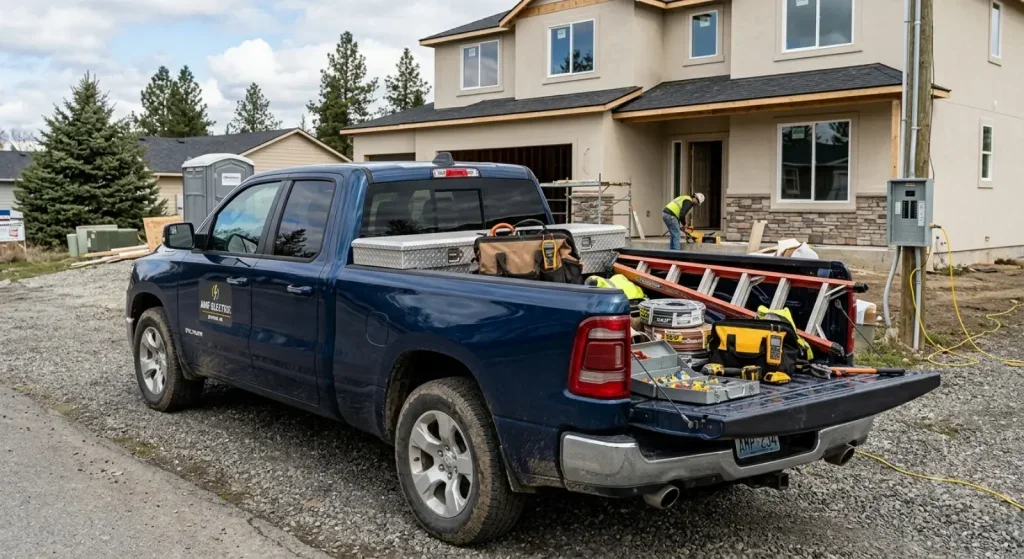
Take an electrician who drives their own truck to job sites every day. Even though the truck is titled in their name, using it consistently for work can put it outside what a personal policy is designed to cover. Generally excluded or heavily scrutinized under a standard personal policy:

  • Vehicles owned or titled to a business entity
  • Vehicles used to transport people or goods for a fee
  • A business's day-to-day operational vehicles, like a plumbing van or landscaping truck

The Gray Area: Occasional Work Use
The situation that catches the most people off guard isn't a business vehicle. It's a personal vehicle used occasionally for work.

Picture a bookkeeper who drives her own car to drop off a client's paperwork once a week. That kind of occasional use may not be automatically excluded on every policy, but coverage here varies significantly by insurer, and claims involving any business use tend to draw closer scrutiny. An insurer that finds out a vehicle was being used for work at the time of a claim may reduce, delay, or deny coverage entirely, depending on the specific policy language.

Why This Matters More for Business Owners

If your business owns any vehicles, even one work truck, that vehicle needs to be insured on a commercial auto policy, not a personal one. Commercial coverage is built for the realities of business use: higher mileage, multiple drivers, tools and equipment on board, and greater liability exposure if something goes wrong.

It's just as important to think about the vehicles your business doesn't own. Consider a landscaping company whose crew leader occasionally uses his own pickup to haul supplies between job sites. If he's in an accident while running that errand, the business may still carry liability exposure, even though it doesn't own the truck. Many businesses in this position add hired and non-owned auto (HNOA) coverage specifically to close that gap, since a personal auto policy alone often won't defend the business if it gets pulled into a claim.

A Few Signs It's Time to Have This Conversation

You may be relying on the wrong kind of coverage if any of the following sound familiar:

  • Your team regularly uses personal vehicles for work errands or job sites
  • Your business owns a vehicle that's still insured under someone's personal policy
  • You've never asked your insurance agent directly whether business use is covered
  • Your fleet has grown since your last insurance review

Any one of these is worth a phone call to your insurance provider before it becomes a claim.

Why Western Washington Businesses Trust Jet Chevrolet

Located in Federal Way along the I-5 corridor, Jet Chevrolet supports fleet customers across Western Washington, including:

  • South Sound & Local: Federal Way, Tacoma, Kent, Auburn, Puyallup, Olympia
  • Greater Seattle & North Sound: Seattle, Bellevue, Renton, Everett, Lynnwood

As part of Dinsmore Auto Group, Jet Chevrolet stays family-operated, with a team that looks at the full picture of vehicle ownership, not just the purchase, including the coverage that protects it. They embrace the philosophy:

Do More. Save More. Experience MORE.

For business owners insuring a growing fleet, that means a partner who helps you think through every cost of ownership, including the ones that aren't on the price tag.

Talk to a commercial vehicle expert at (253) 336-4216 about what your next fleet purchase means for your insurance needs.

Final Thoughts

A personal auto policy is built for personal driving, and a commercial vehicle needs commercial coverage. The line between the two isn't always obvious, especially for a business just starting to grow its fleet, which is exactly why it's worth confirming with a licensed professional rather than assuming.

Understanding the gap between personal and business auto coverage now, before an accident happens, is one of the simplest ways to protect your business from a costly surprise later.

Disclaimer

Jet Chevrolet isn't a law firm or insurance agency, and this article isn't legal or insurance advice. Laws and policies vary, so talk to a licensed agent or attorney about your specific situation. Our commercial team is happy to point you toward trusted local professionals.

Posted in:

Related Posts

Repairing a comercial work truck

When Should You Replace a Work Truck Instead of Repairing It?

Every work truck eventually reaches a point where another repair raises a bigger question: Is it still worth keeping? There isn't a specific mileage or repair cost that determines when a business should replace a vehicle. Instead, consider how the truck is performing, what it's costing to keep on the road, and whether it still fits the work your business needs it to do. Look Beyond a Single Repair One expensive repair doesn't necessarily mean a truck needs to be replaced. A pattern of repairs may tell you more. Look at the vehicle's maintenance and repair history. If unexpected repairs are becoming more frequent, consider whether you're maintaining a useful business asset or continually putting money into a vehicle that's becoming less dependable. Consider the Cost of Downtime For a work vehicle, the repair bill isn't always the only cost. If a truck is in the shop, an employee or crew may be without the vehicle they need to complete their work. The business may need to rearrange schedules, move equipment between vehicles, or find temporary transportation. As downtime becomes more frequent, reliability can become an important part of the repair-versus-replace decision. Ask Whether the Truck Still Fits the Job Sometimes a work truck needs to be replaced even when it's still running well. Your business may have added employees, started carrying different equipment, taken on larger jobs, or changed the type of work it performs. A vehicle that made sense several years ago may no longer have the space, capability, or configuration the business needs today. Don't Wait Until the Decision Is Made for You Waiting until a vehicle can no longer be used can turn a planned purchase into an urgent one. Keeping an eye on repair frequency, downtime, mileage, condition, and changing business needs can help you identify vehicles that may be approaching replacement before they begin disrupting operations. Thinking about replacing a work truck or adding a new commercial vehicle? Connect with the Jet Chevrolet team at (253) 336-4216 to discuss your business and fleet needs. Final Thoughts Repairing an existing truck can make sense when it remains dependable and continues to fit the job. When repairs become more frequent, downtime starts affecting the business, or the vehicle no longer meets your needs, it may be time to evaluate a replacement.

Customer talking to dealership about fleet vehicles

What Should You Bring to the Dealership When Shopping for a Fleet Vehicle?

Shopping for a work vehicle is easier when you can explain exactly what the vehicle needs to do. You don't need to arrive with every specification figured out. But bringing a few details about your everyday work can help narrow down the trucks and configurations that actually fit your business. Know What You Carry Think about what will be in the truck on a typical workday, not just occasionally. That may include: Employees or crew members Tools and equipment Materials and supplies Toolboxes, racks, or other permanent equipment If you already use a work vehicle, consider what works well about its current setup and what you wish you could change. That real-world experience can be particularly helpful when comparing your next truck. Bring Information About Your Trailer If towing is part of the job, don't rely on simply saying you have a "small equipment trailer" or "enclosed trailer." Bring the information you have for the trailer and the loads you expect to tow. Knowing the trailer type and relevant weight information gives the commercial team more useful information when helping you evaluate vehicle configurations. Towing capability can vary significantly between trucks that otherwise look similar, so the details matter. Know About Planned Upfits If you're planning to add a service body, ladder rack, toolbox, plow, storage system, or other equipment, mention it before choosing the truck. An upfit can affect how the finished vehicle is configured and used. Planning for it from the beginning is better than selecting a truck and only afterward determining whether it works with the equipment you intended to add. If you've already chosen an upfit, bringing its specifications or information from the upfit provider can be useful. Think About Where the Truck Will Work A truck that spends most of its time traveling highways has a different working environment from one regularly navigating tight neighborhoods, construction sites, unpaved roads, parking garages, or other restricted spaces. Consider where the vehicle needs to fit and the conditions it regularly encounters. Overall vehicle size, maneuverability, drivetrain, and other configuration choices may matter differently depending on where the truck actually works. Why Western Washington Businesses Work With Jet Chevrolet Located in Federal Way along the I-5 corridor, Jet Chevrolet works with commercial customers throughout Western Washington, including Federal Way, Tacoma, Kent, Auburn, Puyallup, Olympia, Seattle, Bellevue, Renton, Everett, and Lynnwood. As part of Dinsmore Auto Group, Jet Chevrolet is locally owned and family operated. Our commercial team works with businesses to compare work trucks and commercial vehicles based on what the job actually requires. The more your commercial vehicle team understands about your operation, the easier it is to narrow down the vehicles that deserve a closer look. Shopping for your next work truck or commercial vehicle? Connect with the Jet Chevrolet team at (253) 336-4216 to discuss what your business needs from its next vehicle. Final Thoughts You don't need to show up at the dealership with a list of truck specifications. Bring information about the work instead. Knowing your typical loads, trailer requirements, planned upfits, crew needs, and operating environment gives you a practical starting point for finding a work truck that fits the job.

Work Ready Window Sticket

How to Read a Work Truck Window Sticker Before You Buy

Two trucks with the same model and trim can still be equipped very differently. For a business buying a work vehicle, those differences can matter more than they might appear on the lot. A window sticker can help you quickly understand how a specific truck is configured, what equipment you're paying for, and what deserves a closer look before you buy. Start With the Truck's Configuration First, confirm that the truck itself matches what you need. Depending on the vehicle, the window sticker can identify details such as: Model and trim Cab and bed configuration Engine Transmission Drivetrain Exterior and interior features VIN For a work truck, details like cab size, bed length, engine, and drivetrain can directly affect how well the vehicle fits its intended role. Look Beyond the Trim Level A trim name doesn't tell you everything that's included on a truck. Factory packages and individual options can add towing equipment, technology, convenience features, off-road equipment, and other upgrades. Reviewing these items can also help explain why two trucks with the same trim may have noticeably different MSRPs. For a business buyer, the important question is whether those added features are useful for the work the truck will actually perform. Pay Attention to Trailering Equipment If the truck will regularly tow, look for any factory trailering equipment or packages listed on the sticker. Depending on the vehicle, these may include trailer brake controls, hitch-related equipment, cameras, or other trailering features. Don't assume that having a trailering package means every truck has the same towing capability. Ratings can vary based on engine, drivetrain, cab, bed, equipment, and other aspects of the vehicle's configuration. Know What the Window Sticker Doesn't Tell You The window sticker is a useful starting point, but it isn't a complete capability guide. If your business needs a truck to tow a particular trailer or carry substantial equipment, materials, passengers, or an upfit, verify the ratings for the specific vehicle you're considering. This is especially important with work trucks because everything added to the vehicle can become part of the overall working setup. Compare What You're Actually Paying For When deciding between two similar trucks, compare their window stickers side by side. Instead of looking only at the difference in price, look at why the prices are different. One truck may include equipment your business needs, while another may include options that won't provide much value for the way you'll use it. A work truck's badge only tells you part of the story. Understanding how a specific vehicle is equipped can help you make a more informed comparison before adding it to your business. Looking for your next work truck or commercial vehicle? Connect with the Jet Chevrolet team at (253) 336-4216 to discuss your commercial vehicle needs. Final Thoughts Before choosing a work truck, take a few minutes to look beyond the model and trim. Review its configuration, packages, options, and trailering equipment, then verify any vehicle-specific ratings that are important for the job. The goal isn't to understand every line on the sticker. It's to know which details matter for the work your business needs the truck to do.