




Blog

Electrify Your Drive: Unveiling the All-New Chevy Equinox EV at Jet Chevrolet

Chevy Equinox EV

Electrify Your Drive: Unveiling the All-New Chevy Equinox EV at Jet Chevrolet

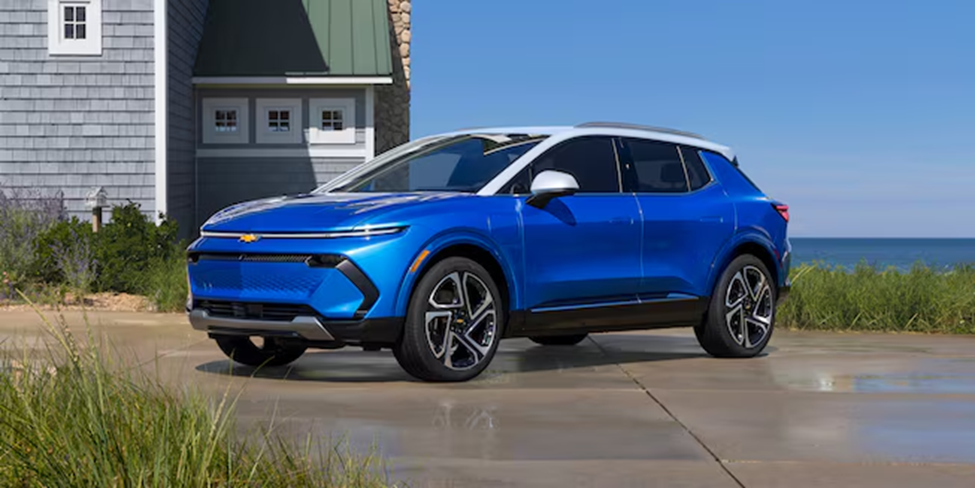
The electric vehicle (EV) revolution is in full swing, and Chevrolet is at the forefront of this exciting transition. Enter the 2024 Chevy Equinox EV, a game-changing electric SUV poised to redefine the segment with its blend of functionality, technology, and thrilling performance. Are you ready to ditch the gas station and embrace a future of sustainable driving? Look no further than the innovative Chevy Equinox EV, available at Jet Chevrolet near Federal Way.

The Benefits of Choosing an Electric Vehicle

Before diving into the specifics of the Equinox EV, let's explore the compelling advantages of owning an electric vehicle:

● Reduced Environmental Impact: EVs produce zero tailpipe emissions, contributing significantly to cleaner air and a healthier planet.
● Lower Running Costs: Electric vehicles boast significantly lower fuel costs compared to gasoline-powered cars. Government incentives and tax credits further enhance the financial benefits of going electric.
● Quieter Operation: Enjoy a more peaceful driving experience with the near-silent operation of an electric motor.
● Improved Performance: Electric motors offer instant torque, translating to exhilarating acceleration and a more responsive driving experience.
● Reduced Maintenance: EVs require less maintenance compared to gasoline-powered vehicles, thanks to fewer moving parts and fluids.

The Chevy Equinox EV: A Closer Look at its Features

The 2024 Chevy Equinox EV builds upon the legacy of the popular Equinox model, offering a spacious and versatile interior perfect for families or those with active lifestyles. But beneath the familiar silhouette lies a revolutionary electric powertrain, packed with innovative features:

● Multiple Trim Levels: The Equinox EV comes in a variety of trim levels to cater to different needs and budgets. These include the base LS, the mid-range LT, and the top-of-the-line RS, which boasts a sportier design and enhanced performance features.
● Spacious Interior: Whether you're running errands around town or embarking on a road trip, the Equinox EV's comfortable and spacious interior accommodates five passengers and their cargo with ease. 60/40 split-folding rear seats further enhance cargo flexibility.
● Advanced Technology: The Equinox EV embraces the latest technology, featuring an intuitive infotainment system with a user-friendly touchscreen display. Apple CarPlay™ and Android Auto™ integration seamlessly connects your smartphone, providing access to navigation, music streaming, and hands-free calling. Additionally, the available Chevrolet Safety Assist suite offers driver-assistance features like Automatic Emergency Braking and Lane Departure Warning, enhancing safety on the road.
● Convenient Charging Options: The Equinox EV supports both Level 2 and DC fast charging, offering flexibility for your charging needs. Level 2 charging allows for convenient overnight charging at home, while DC fast charging provides the ability to add significant range quickly on longer journeys.

Unleashing the Power: Exploring the Equinox EV's Range and Performance
One of the most crucial factors when considering an electric vehicle is its range. The 2024 Chevy Equinox EV delivers an impressive estimated range, depending on the chosen battery pack and configuration. The base model offers a range of over 250 miles, while higher trims with larger batteries can potentially reach up to 300 miles on a single charge (figures according to EPA estimates). These ranges provide peace of mind for everyday commutes and weekend adventures, minimizing the need for frequent charging stops.
Performance Beyond Expectations: Electric Power Delivers a Thrill
The Chevy Equinox EV isn't just about efficiency; it's also about driving excitement. The electric motor delivers instant torque, translating to exhilarating acceleration and a smooth, responsive driving experience. This newfound sense of power will redefine your daily commute and transform even routine errands into enjoyable journeys.

Unleashing the Power: Exploring the Equinox EV's Range and Performance

One of the most crucial factors when considering an electric vehicle is its range. The 2024 Chevy Equinox EV delivers an impressive estimated range, depending on the chosen battery pack and configuration. The base model offers a range of over 250 miles, while higher trims with larger batteries can potentially reach up to 300 miles on a single charge (figures according to EPA estimates). These ranges provide peace of mind for everyday commutes and weekend adventures, minimizing the need for frequent charging stops.

Performance Beyond Expectations: Electric Power Delivers a Thrill
The Chevy Equinox EV isn't just about efficiency; it's also about driving excitement. The electric motor delivers instant torque, translating to exhilarating acceleration and a smooth, responsive driving experience. This newfound sense of power will redefine your daily commute and transform even routine errands into enjoyable journeys.

Experience the Future of Driving at Jet Chevrolet
The 2024 Chevy Equinox EV represents a turning point in the automotive industry, offering a compelling combination of functionality, technology, and thrilling performance. At Jet Chevrolet near Federal Way, they're passionate about electric vehicles and are committed to helping you navigate the transition to a more sustainable future. Their knowledgeable staff can answer your questions, guide you through the various Equinox EV trim levels and features, and help you find the perfect electric SUV to match your needs and lifestyle. Visit Jet Chevrolet today and schedule a test drive. Experience the electrifying power of the Chevy Equinox EV and discover why it's the perfect choice for your next car!

Embrace a cleaner future, enjoy lower running costs, and rediscover the thrill of driving with the Chevy Equinox EV!

Recommended Posts

Giving an employee keys to a company work vehicle

When Should a Business Move From Employee Vehicles to Company-Owned Work Vehicles?

Many small trade businesses start with employees using their own vehicles for occasional work-related driving. As the company grows, however, there may come a point when dedicated company work vehicles make more sense. There isn't a universal fleet size where that transition should happen. The better question is whether personal vehicles still fit the way the business operates. When Personal Vehicles Can Work For occasional business driving, using employee-owned vehicles can be a practical arrangement. Businesses may reimburse employees for qualifying business mileage or vehicle expenses under an appropriate reimbursement policy. However, occasional trips are different from asking an employee's personal vehicle to function as a work vehicle every day. Look at What Employees Are Actually Doing As field work increases, consider how employees are using their personal vehicles. Are they regularly traveling between job sites? Carrying company tools or materials? Making frequent customer visits? Towing or transporting equipment? Putting substantial business mileage on their own vehicles? If business use has become a major part of the vehicle's daily role, it may be worth evaluating whether a company-owned vehicle is a better fit. Company Vehicles Give the Business More Control With a company-owned work vehicle, the business chooses the vehicle based on the work it needs to perform. The company can also establish consistent policies for authorized drivers, maintenance, fuel, vehicle use, and equipment. That's different from relying on employees' personal vehicles, which may vary considerably in age, condition, capability, and suitability for the work. Insurance should also be reviewed carefully whenever employees drive for business, whether they use personal or company vehicles. The appropriate coverage depends on the business and how the vehicles are used. Consider the Employee Side Too Regularly using a personal vehicle for work can mean additional mileage and wear for the employee. A reimbursement program can address qualifying business vehicle expenses, but it doesn't necessarily answer the broader operational question of whether an employee's personal car or truck is the right vehicle for the job. As a company adds crews or expands its service territory, providing work vehicles may become part of building the infrastructure needed to support field operations. Plan for the Transition to Company Vehicles Moving to company-owned vehicles gives a business greater control over how its work vehicles are selected, maintained, and used. It also means bringing expenses such as insurance, maintenance, registration, fuel or charging, and fleet administration into the company's operating plan. Clear vehicle-use policies are important as well. If employees are allowed to commute or use company vehicles personally, there may be tax and recordkeeping considerations depending on the circumstances, so businesses should work with their tax and insurance professionals when establishing those policies. Planning for these responsibilities from the beginning can help a business build a fleet that supports its crews and continues to work as the company grows. Is your business reaching the point where dedicated work vehicles make sense? Connect with the Jet Chevrolet team at (253) 336-4216 to discuss your commercial vehicle needs. Do More. Save More. Experience MORE. Final Thoughts Employee-owned vehicles can work well when business driving is limited. But, as crews spend more time on the road and vehicles become more important to daily operations, dedicated company work trucks may deserve a closer look. Consider how often employees drive for work, what they're carrying, what the job requires, and how much control the business needs over its vehicles. The right time to build a company fleet is different for every business, but the decision should follow how the company actually operates.

Tracking statistics about a commercial fleet vehicle

The First 90 Days With a New Fleet Vehicle: What Businesses Should Track

Adding a new work truck or commercial vehicle to your fleet is only the beginning. The first few months of actual use can tell you whether the vehicle is performing the job you purchased it to do. Instead of waiting until the end of the year to evaluate a new vehicle, use its first 90 days to establish a baseline. Mileage, fuel use, maintenance needs, utilization, and feedback from the employees using the vehicle can all provide useful information for future fleet decisions. Start With a Clear Vehicle Record Before the vehicle enters regular service, document the basics. Record the VIN, vehicle configuration, assigned driver or crew if applicable, in-service date, initial mileage, and any accessories or upfits installed on the vehicle. Keep relevant warranty, maintenance, and vehicle documentation accessible as well. Starting with accurate records gives you something to reference later when reviewing operating history or comparing vehicles within the fleet. Track How Much the Vehicle Is Actually Used One of the simplest things to measure is utilization. Depending on the type of work vehicle, useful measurements can include: Miles driven Days in use Number of trips Engine hours, when relevant Type of work or routes the vehicle regularly handles After 90 days, compare actual use with what you expected when the vehicle was purchased. A truck intended for daily field work may be operating differently than anticipated, and that information can be useful when deciding what the next vehicle should look like. Establish a Fuel-Use Baseline Record fuel purchases and mileage consistently from the beginning. The goal isn't necessarily to decide whether a vehicle is “good” or “bad” based on its first few tanks. Fuel consumption can be affected by driving conditions, load, routes, idling, weather, and how the vehicle is used. Instead, the first 90 days can provide an initial operating baseline that can be compared with the vehicle's performance over time or with similar vehicles performing similar work. Fuel consumption and mileage are commonly tracked together as part of fleet performance monitoring. Get Feedback From the People Using It Numbers don't tell you everything. Ask the employees who regularly use the vehicle whether it fits the work. Are they frequently carrying passengers? Is the vehicle being used for the jobs you expected? Are there features or equipment they use constantly? Is something about the configuration making routine work unnecessarily difficult? This doesn't mean every preference requires a change. The goal is to identify patterns that could inform the next vehicle purchase or upfit. Review the Vehicle at 30, 60, and 90 Days You don't need a complicated reporting system to learn from a new fleet vehicle. A simple review at roughly 30, 60, and 90 days can help answer: Is the vehicle being used as expected? Look at mileage, trips, routes, assignments, and the work it's performing. Is the configuration working? Talk with the employees using it and note recurring issues or needs. What is it costing to operate so far? Review fuel and any maintenance or other vehicle-specific operating expenses you've chosen to track. At 90 days, you should have a clearer picture of how the vehicle fits into the business than you had on the day you bought it. Use What You Learn on the Next Purchase The greatest value of tracking a new vehicle may come when it's time to buy another one. If a particular configuration works well, you have real-world experience supporting that decision. If the vehicle is consistently being used differently than expected, that information can help you reconsider the next purchase. Over time, keeping consistent records across multiple vehicles can give a business its own operating history rather than relying entirely on assumptions when making fleet decisions. Fleet utilization data is commonly used to inform acquisition, allocation, and replacement planning. Adding or replacing a commercial vehicle? Connect with the Jet Chevrolet team at (253) 336-4216 to discuss your business and fleet needs. Do More. Save More. Experience MORE. Final Thoughts The first 90 days with a new fleet vehicle are an opportunity to learn whether the vehicle fits the job it was purchased to perform. Track how it's used, what it costs to operate, how employees work with it, and whether the original configuration still makes sense after real-world use. Those early observations can help turn one vehicle purchase into better information for the next fleet decision.

Commercial Fleet Vehicles

How Many Work Vehicles Does Your Business Actually Need?

As a business grows, knowing when to add another work vehicle isn’t always obvious. A contractor may have enough trucks most days but run short when multiple crews need to be in different places. Another business may have vehicles sitting often enough that adding another one doesn’t make sense yet. That’s where fleet sizing comes in. Fleet sizing is about matching the number and types of commercial vehicles you operate to the work your business actually performs. Start With How Your Vehicles Are Actually Used Mileage alone doesn’t tell you whether your fleet is the right size. A local service van may accumulate relatively few miles while still being needed every day. Instead, look at how frequently each vehicle is needed. Are most working every day? Are certain trucks constantly requested by multiple employees? Are others regularly sitting unused? The goal is to understand whether your current fleet has enough capacity to support the work your crews are ready to perform. Watch for Vehicle Scheduling Conflicts One of the clearest signs that a business may be outgrowing its fleet is when vehicle availability starts affecting scheduling. Watch for situations like: Two crews regularly needing the same vehicle Employees waiting for a vehicle before leaving for a job Jobs being scheduled around vehicle availability Frequent vehicle reassignment between crews A specialized truck being unavailable when needed An occasional conflict is normal. When it becomes routine, vehicle availability may be creating a bottleneck. Think in Crews, Not Just Employees Ten employees don’t necessarily require ten vehicles. A service business with technicians traveling independently may need more vehicles than a contractor whose employees travel together in crews. A better question is: How many crews need to operate independently at the same time? Then consider what each crew needs to carry, tow or access throughout the day. Plan for Growth Your current workload isn't the only factor. If you're hiring technicians, adding another crew, expanding your service territory or taking on more work, your vehicle needs may grow along with the business. Ideally, vehicle planning happens alongside hiring and expansion, not after a new employee is ready to work and there isn't an appropriate vehicle available. Make Sure You Have the Right Mix of Vehicles Fleet sizing isn't only about how many vehicles you have. It's also about what those vehicles can do. Service vans, pickups, towing vehicles and specialized work trucks may serve completely different roles. A business can have enough vehicles overall and still experience shortages if too few are equipped for a particular job. Also consider what happens when a key vehicle is unavailable for maintenance or repairs. If losing one truck immediately disrupts the schedule, that may be worth factoring into future fleet planning. When Does Adding Another Vehicle Make Sense? Before expanding your fleet, consider: Are vehicle conflicts happening regularly? Are you adding another independently operating crew? Is the business expanding into a larger service area? Do you need capabilities your existing vehicles don't provide? Would another vehicle allow your team to complete additional work? Is the need consistent rather than just seasonal? If there’s a clear answer, it may be time to evaluate additional fleet capacity. Why Western Washington Businesses Work With Jet Chevrolet Located in Federal Way along the I-5 corridor, Jet Chevrolet works with commercial customers throughout Western Washington, including Federal Way, Tacoma, Kent, Auburn, Puyallup, Olympia, Seattle, Bellevue, Renton, Everett and Lynnwood. As part of Dinsmore Auto Group, Jet Chevrolet is locally owned and family operated. Our commercial team works with businesses to evaluate vehicle options based on their work and fleet requirements. Do More. Save More. Experience MORE. As your business adds employees, crews, customers or service areas, your commercial vehicle needs may change with it. Planning to add another work truck or commercial vehicle? Connect with the Jet Chevrolet team at (253) 336-4216 to discuss your fleet needs. Final Thoughts There isn't one vehicle-to-employee ratio that works for every business. The right fleet size depends on how your crews operate, what your vehicles need to accomplish and where your business is headed. When vehicle availability starts limiting the work your team is ready to perform, it may be time to consider adding capacity.